
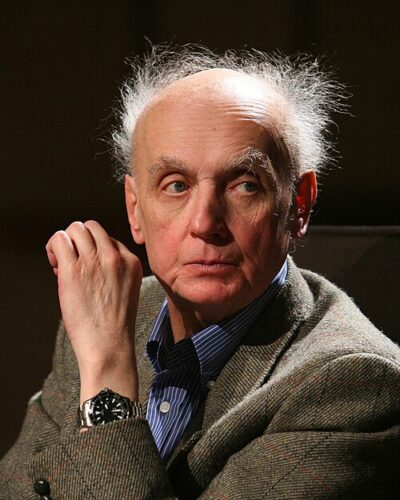
Wojciech Kilar
Wojciech Kilar was a Polish composer and pianist. Born July 17, 1932, in Lviv. Died December 29, 2013, in Katowice. Known for Angelus, Prelude and Christmas carol and Exodus. Educated at Academy of Music in Katowice. Awards include Knight of the Legion of Honour, Order of the White Eagle and Golden Medal for Merit to Culture.
Facts
60 facts · 2 confirmed by two sources · 10 cited · 48 from one source
Where this comes from
Papalocal keeps its own record. It started from these sources; what each one said is kept here as it was copied, so a change on their side never changes this page by itself. Tap one to read its version.
What Wikidata says · copied November 16, 2026 · revision 2567307777
- Described as
- Polish composer and pianist (1932–2013)
- Other names
- Kilar, Wojciech Artur Kilar
- Born
- July 17, 1932 · 10 references
- Died
- December 29, 2013 · 10 references
- Born in
- Lviv · 1 reference
- Died in
- Katowice · 1 reference
- Buried in
- Cemetery on Sienkiewicza Street in Katowice
- Cause of death
- brain cancer
- Name at birth
- Wojciech Kilar · 1 reference
- Citizen of
- Poland
- Occupation
- composer · 2 references; pianist; film score composer; university teacher; musician · 1 reference
- Worked for
- Academy of Music in Kraków · 1 reference
- Education
- Academy of Music in Katowice (1950–1955)
- Member of
- Polish Academy of Learning (1998–) · 1 reference; Związek Podhalan; Union of Polish Composers; Polish Film Academy · 1 reference
- Genre
- classical music; contemporary classical music; liturgical music; religious music
- Instrument
- piano
- Known for
- Angelus · 1 reference; Prelude and Christmas carol · 1 reference; Exodus; Krzesany; Kościelec 1909; Hoary Fog; Orawa; Missa pro pace · 1 reference; Symphony No. 3; Symphony No. 2
- Awards
- Knight of the Legion of Honour (2013); Order of the White Eagle (2012); Golden Medal for Merit to Culture (2005) · 1 reference; Louis Delluc Prize (1980) · 1 reference; César Award for Best Music Written for a Film (2002) · 1 reference; Lux ex Silesia (1995); Polish Academy Award for Best Film Score · 1 reference; Zasłużony Działacz Kultury; Commander with Star of the Order of Polonia Restituta (2002) · 1 reference; Grand Cross of the Order of Polonia Restituta (2008) · 1 reference; Order Ecce Homo · 1 reference; Knight of the Order of Polonia Restituta · 1 reference; Wojciech Korfanty prize (1995); Karol Miarka Award (2003); Juliusz Ligoń Award (2003)
- Field
- film score; contemporary classical music; religious music
- Mother
- Neonilla Kilar-Krzywiecka
- Religion
- Catholicism; Catholic Church
- Lived in
- Lviv; Krosno; Rzeszów; Darmstadt · 1 reference; Paris · 1 reference
- Wikipedias with a page
- 39
Wikidata item Q319777 (wikidata.org/wiki/Q319777), public domain (CC0). Copied November 16, 2026.
What Wikipedia says · copied November 16, 2026 · revision 1372431138
Wojciech Kilar (Polish: [ˈvɔjt͡ɕɛx ˈkʲilar]; 17 July 1932 – 29 December 2013) was a Polish classical and film music composer. One of his greatest successes came with his score to Francis Ford Coppola's Bram Stoker's Dracula in 1992, which received the ASCAP Award and the nomination for the Saturn Award for Best Music. In 2003, he won the César Award for Best Film Music written for The Pianist, for which he also received a BAFTA nomination. In 2012, he became the recipient of Poland's highest distinction, the Order of the White Eagle.
- Born, in its opening lines
- July 17, 1932
- Died, in its opening lines
- December 29, 2013
From the Wikipedia article “Wojciech Kilar” (en.wikipedia.org/wiki/Wojciech_Kilar), by its contributors, under CC BY-SA 4.0 (creativecommons.org/licenses/by-sa/4.0/). Copied November 16, 2026; not changed.
Confirmed Two sources agree. Cited One source, and it names where it got it. One source One source, without a reference of its own. Sources disagree The sources disagree. We show the best-supported value and keep theirs below.
