
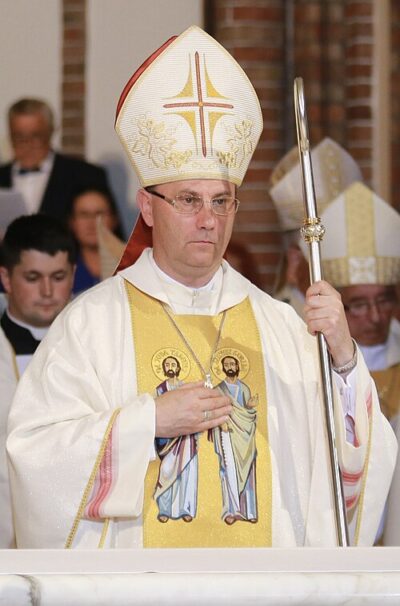
Wojciech Polak
Wojciech Polak is a Polish archbishop, Primate of Poland. Born December 19, 1964, in Inowrocław. Positions held include Roman Catholic Archbishop of Gniezno (2014–), titular bishop (2003–) and auxiliary bishop (2003–2014). Educated at Pontifical Lateran University. Awards include Saint George medal.
Facts
14 facts · 1 confirmed by two sources · 5 cited · 8 from one source
Where this comes from
Papalocal keeps its own record. It started from these sources; what each one said is kept here as it was copied, so a change on their side never changes this page by itself. Tap one to read its version.
What Wikidata says · copied November 18, 2026 · revision 2543470500
- Described as
- Polish archbishop, Primate of Poland
- Born
- December 19, 1964
- Born in
- Inowrocław
- Citizen of
- Poland · 1 reference
- Occupation
- Catholic priest (1989–) · 1 reference; Catholic bishop (2003–) · 1 reference
- Positions held
- Roman Catholic Archbishop of Gniezno (2014–) · 1 reference; titular bishop (2003–) · 1 reference; auxiliary bishop (2003–2014) · 1 reference; Primate of Poland (2014–); Secretary General of the Polish Episcopal Conference (2011–2014)
- Worked for
- Adam Mickiewicz University in Poznań · 1 reference
- Education
- Pontifical Lateran University
- Awards
- Saint George medal
- Religion
- Catholic Church · 1 reference
- Wikipedias with a page
- 21
Wikidata item Q2588303 (wikidata.org/wiki/Q2588303), public domain (CC0). Copied November 18, 2026.
What Wikipedia says · copied November 18, 2026 · revision 1379733275
Wojciech Polak (born 19 December 1964) is the Roman Catholic archbishop of Gniezno, Poland, since his appointment on 17 May 2014. He previously served as an auxiliary bishop of Gniezno.
- Born, in its opening lines
- December 19, 1964
From the Wikipedia article “Wojciech Polak” (en.wikipedia.org/wiki/Wojciech_Polak), by its contributors, under CC BY-SA 4.0 (creativecommons.org/licenses/by-sa/4.0/). Copied November 18, 2026; not changed.
Confirmed Two sources agree. Cited One source, and it names where it got it. One source One source, without a reference of its own. Sources disagree The sources disagree. We show the best-supported value and keep theirs below.
