
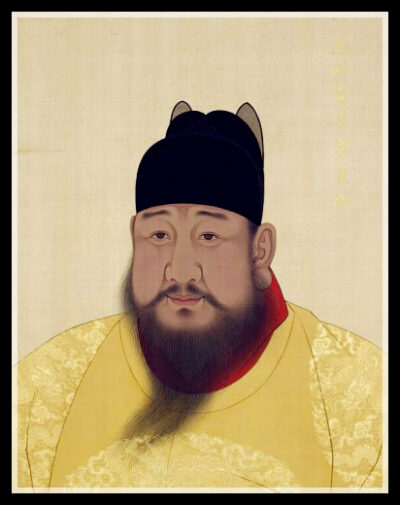
Xuande Emperor
Xuande Emperor was an emperor of the Ming Dynasty. Born March 16, 1399, in Beijing. Died January 31, 1435, in Imperial City. Positions held include Emperor of China (1425–1435).
Facts
30 facts · 2 confirmed by two sources · 6 cited · 22 from one source
Where this comes from
Papalocal keeps its own record. It started from these sources; what each one said is kept here as it was copied, so a change on their side never changes this page by itself. Tap one to read its version.
What Wikidata says · copied November 16, 2026 · revision 2561687058
- Described as
- emperor of the Ming Dynasty (1399-1435)
- Other names
- Zhang Di, Emperor Xuande of Ming, Muweituqi, Xuanzong, Xiantianchongdaoyingmingshenshengqinwenzhaowukuanrenchunxiaozhanghuangdi, Xuan Zong, Xuande, Zhangdi, Hsüan-te, Emperor of China, Emperor Xuanzong of Ming, Zhu Zhanji
- Born
- March 16, 1399
- Died
- January 31, 1435
- Born in
- Beijing
- Died in
- Imperial City
- Buried in
- Jingling (Ming dynasty)
- Citizen of
- Ming dynasty · 1 reference
- Occupation
- artist · 2 references; painter · 1 reference
- Positions held
- Emperor of China (1425–1435)
- Spouse
- Empress Xiaogongzhang; Empress Gongrangzhang; Empress Dowager Xiaoyi, of the Wu clan; Gongshen
- Children
- Zhengtong Emperor · 1 reference; Jingtai Emperor · 1 reference; Princess Changde · 1 reference; Princess Yongqing · 2 references; Princess Shunde · 1 reference
- Father
- Hongxi Emperor · 2 references
- Mother
- Empress Chengxiaozhao
- Siblings
- Princess Yanping; princess Te'an; Princess Qingdou; Princess Jiaxing; Princess Qinghe; Princess Zhending; Zhu Zhanshan; Zhu Zhanji; Zhu Zhanyin; Zhu Zhanjun
- Wikipedias with a page
- 40
Wikidata item Q9977 (wikidata.org/wiki/Q9977), public domain (CC0). Copied November 16, 2026.
What Wikipedia says · copied November 16, 2026 · revision 1385620207
The Xuande Emperor (16 March 1399 – 31 January 1435), personal name Zhu Zhanji, was the fifth emperor of the Ming dynasty of China, reigning from 1425 to 1435. He succeeded his father, the Hongxi Emperor.
The Xuande Emperor displayed skills in writing, painting, and military command. Upon ascending the throne, he abandoned his father's plan to move the capital from Beijing to Nanjing. The Xuande Emperor personally led a campaign to suppress his uncle Zhu Gaoxu's rebellion in 1426, forcing him to surrender. Early in his reign, a prolonged war in Ming-controlled Jiaozhi Province (present-day northern Vietnam) ended in a Ming defeat and the restoration of independence to Đại Việt.
Relations with Southeast Asian nations stayed peaceful. Communication continued with Korea, and ties were established with Japan in 1432. The northern region faced minimal Mongol threats. The Xuande Emperor permitted Zheng He's final Indian Ocean voyage in 1431–1433, and during his rule court eunuchs gained influence. The Emperor sought order through purges in the Censorate and military service reforms in 1428, but these did not fully resolve the inefficiency and low morale of the army.
The Xuande Emperor's government attempted to promote the use of paper money and discourage the use of coins and precious metals, but this effort was ultimately unsuccessful and paper money fell out of circulation. To address peasant flight from heavily taxed prefectures, particularly from Jiangnan, the Emperor reduced taxes and dispatched "grand coordinators" to the provinces to improve local governance. These coordinators were responsible for addressing issues of injustice and corruption among tax collectors, as well as assessing the state of military units. Historians have regarded his reign as the golden age of the Ming dynasty.
- Born, in its opening lines
- March 16, 1399
- Died, in its opening lines
- January 31, 1435
From the Wikipedia article “Xuande Emperor” (en.wikipedia.org/wiki/Xuande_Emperor), by its contributors, under CC BY-SA 4.0 (creativecommons.org/licenses/by-sa/4.0/). Copied November 16, 2026; not changed.
Confirmed Two sources agree. Cited One source, and it names where it got it. One source One source, without a reference of its own. Sources disagree The sources disagree. We show the best-supported value and keep theirs below.
