
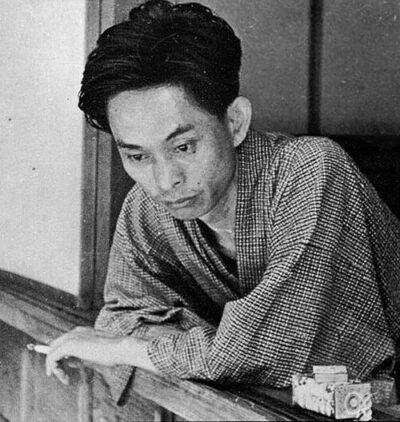
Yasunari Kawabata
Yasunari Kawabata was a Japanese novelist. Born June 11, 1899, in Osaka. Died April 16, 1972, in Zushi. Known for The Dancing Girl of Izu, Snow Country and Thousand Cranes. Educated at University of Tokyo. Awards include Kikuchi Kan Prize (2 times), Japan Art Academy Prize and Noma Literary Prize.
Facts
31 facts · 2 confirmed by two sources · 4 cited · 25 from one source
Where this comes from
Papalocal keeps its own record. It started from these sources; what each one said is kept here as it was copied, so a change on their side never changes this page by itself. Tap one to read its version.
What Wikidata says · copied November 16, 2026 · revision 2568761909
- Described as
- Japanese novelist (1899–1972)
- Born
- June 11, 1899 · 7 references
- Died
- April 16, 1972 · 12 references
- Born in
- Osaka · 1 reference
- Died in
- Zushi · 2 references
- Citizen of
- Japan
- Occupation
- writer · 2 references; novelist; screenwriter; poet · 1 reference
- Education
- University of Tokyo
- Known for
- The Dancing Girl of Izu; Snow Country; Thousand Cranes; The Old Capital; The House of the Sleeping Beauties; The Sound of the Mountain
- Awards
- Kikuchi Kan Prize (2 times) (1944, 1958); Japan Art Academy Prize (1952); Noma Literary Prize (1954); Goethe Plaque of the City of Frankfurt (1959); Officer of Arts and Letters (1960) · 2 references; Order of Culture (1961); Person of Cultural Merit (1961); Mainichi Publication Culture Award (1962); Nobel Prize in Literature (1968) · 2 references; Order of the Rising Sun, 1st class (1972)
- Field
- literature · 1 reference
- Spouse
- Hideko Kawabata
- Religion
- Buddhism
- Lived in
- Toyokawa (1902–1915); Kamakura (1946–1972)
- Wikipedias with a page
- 126
Wikidata item Q43736 (wikidata.org/wiki/Q43736), public domain (CC0). Copied November 16, 2026.
What Wikipedia says · copied November 16, 2026 · revision 1384299030
Yasunari Kawabata (川端 康成, Kawabata Yasunari; Japanese pronunciation: [kä̀.β̞ä́.bä́.tä́ | jä̀.sɨ́.nä̀.ɾʲì, -tä́ jä́-, -tä́], 11 June 1899 – 16 April 1972), referred to in rare circumstances as Kōsei Kawabata, was a Japanese novelist and short story writer whose spare, lyrical, subtly-shaded prose works won him the 1968 Nobel Prize in Literature, the first Japanese author to receive the award. His works have enjoyed broad international appeal and are still widely read.
- Born, in its opening lines
- June 11, 1899
- Died, in its opening lines
- April 16, 1972
From the Wikipedia article “Yasunari Kawabata” (en.wikipedia.org/wiki/Yasunari_Kawabata), by its contributors, under CC BY-SA 4.0 (creativecommons.org/licenses/by-sa/4.0/). Copied November 16, 2026; not changed.
Confirmed Two sources agree. Cited One source, and it names where it got it. One source One source, without a reference of its own. Sources disagree The sources disagree. We show the best-supported value and keep theirs below.
