
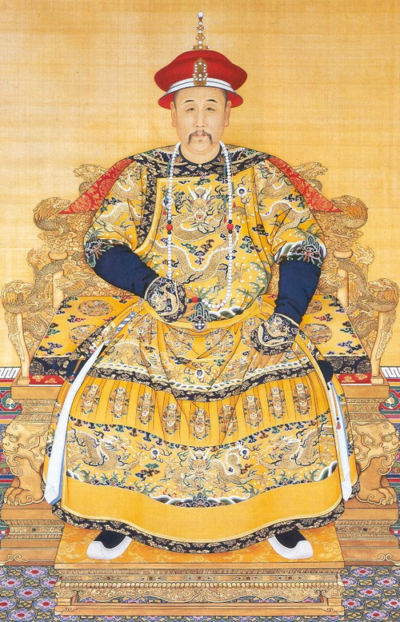
Yongzheng Emperor
Yongzheng Emperor was an emperor of Qing-dynasty China from 1722 to 1735. Born December 13, 1678, in Forbidden City. Died October 8, 1735, in Beijing. Positions held include Emperor of China (1722–1735). Known for Collected Works of Shizong the Xian Emperor.
Facts
40 facts · 2 confirmed by two sources · 2 cited · 34 from one source · 2 where the sources disagree
What’s different
- Cause of death: we show stroke (Sources disagree). Wikidata also lists Chinese alchemical elixir poisoning
- Name at birth: we show ᡳᠨ ᠵᡝᠨ (Sources disagree). Wikidata also lists 胤禛
Where this comes from
Papalocal keeps its own record. It started from these sources; what each one said is kept here as it was copied, so a change on their side never changes this page by itself. Tap one to read its version.
What Wikidata says · copied November 16, 2026 · revision 2554843757
- Described as
- emperor of Qing-dynasty China from 1722 to 1735 (1678–1735)
- Other names
- Yongzheng, Pochenyanshi, Jingtianchangyunjianzhongbiaozhengwenwuyingmingkuanrenxinyiruishengdaxiaozhichengxianhuangdi, Shizong, Pochenjushi, Langkoujinge, Siyitang, Yinchen, Aixinjueluo Yinzhen, Shih Tsung, Yong Zheng, Yinzhen
- Born
- December 13, 1678 · 1 reference
- Died
- October 8, 1735 · 1 reference
- Born in
- Forbidden City
- Died in
- Beijing
- Buried in
- Tailing Mausoleum (Qing dynasty)
- Cause of death
- stroke; Chinese alchemical elixir poisoning
- Name at birth
- ᡳᠨ ᠵᡝᠨ; 胤禛
- Citizen of
- Qing dynasty · 1 reference
- Occupation
- ruler
- Positions held
- Emperor of China (1722–1735)
- Known for
- Collected Works of Shizong the Xian Emperor
- Spouse
- Empress Xiaojingxian; Empress Xiaoshengxian; Imperial Noble Consort Dunsu; Imperial Noble Consort Chunyi; Consort Qi; Consort Qian
- Children
- Honghui; Hongpan; Hongyun; Hongshi; Qianlong Emperor · 2 references; Hongzhou; Fuyi; Fuhui; Fupei; Hongyan; Heshuo Princess Huaike
- Father
- Kangxi Emperor
- Mother
- Empress Xiaogongren
- Siblings
- State Princess Rongxian; Princess Duanjing of the Second Rank; State Princess Kejing; Kurun Princess Wenxian; State Princess Chunque; Princess Wenke of the Second Rank; Princess Quejing; Princess Dunke of the Second Rank; eighth daughter of Kangxi; Yunreng
- Wikipedias with a page
- 48
Wikidata item Q317839 (wikidata.org/wiki/Q317839), public domain (CC0). Copied November 16, 2026.
What Wikipedia says · copied November 16, 2026 · revision 1385044884
The Yongzheng Emperor (13 December 1678 – 8 October 1735), also known by his temple name Emperor Shizong of Qing, personal name Yinzhen, was the fourth emperor of the Qing dynasty, and the third Qing emperor to rule over China proper.
The fourth son of the Kangxi Emperor, Yongzheng ascended the throne following prolonged disputes over succession. A hard-working ruler, he aimed to create a more effective government, cracked down on corruption and reformed the personnel and financial administration. His reign also saw the formation of the Grand Council, an institution that had a major impact on the future of the dynasty. Militarily, Yongzheng continued his father's efforts to consolidate Qing's position in Outer Mongolia and Tibet through force.
The Yongzheng Emperor died in 1735 at the age of 56 and was succeeded by his fourth son, who assumed the throne as the Qianlong Emperor. Although his reign was much shorter than that of both his father and his son, the Yongzheng era achieved important reforms, but is also considered by many to be authoritarian, with some describing him as a benevolent despot while others note that autocratic policies went too far.
- Born, in its opening lines
- December 13, 1678
- Died, in its opening lines
- October 8, 1735
From the Wikipedia article “Yongzheng Emperor” (en.wikipedia.org/wiki/Yongzheng_Emperor), by its contributors, under CC BY-SA 4.0 (creativecommons.org/licenses/by-sa/4.0/). Copied November 16, 2026; not changed.
Confirmed Two sources agree. Cited One source, and it names where it got it. One source One source, without a reference of its own. Sources disagree The sources disagree. We show the best-supported value and keep theirs below.
