
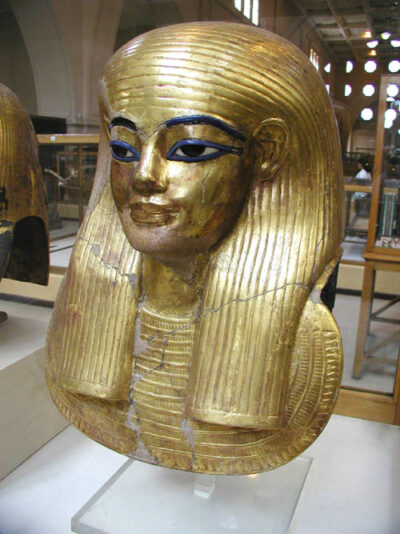
Yuya
Yuya was an ancient Egyptian high priest of Min, father-in-law of Amenhotep III. Born 15th century BC, in Akhmim. Died 14th century BC, in Thebes. Positions held include pharaoh.
Facts
13 facts · 0 confirmed by two sources · 1 cited · 12 from one source
Where this comes from
Papalocal keeps its own record. It started from these sources; what each one said is kept here as it was copied, so a change on their side never changes this page by itself. Tap one to read its version.
What Wikidata says · copied November 17, 2026 · revision 2549940414
- Described as
- ancient Egyptian high priest of Min, father-in-law of Amenhotep III
- Born
- 15th century BC
- Died
- 14th century BC
- Born in
- Akhmim · 1 reference
- Died in
- Thebes
- Occupation
- political adviser; priest; Min · 1 reference; nomarch · 1 reference
- Positions held
- pharaoh
- Spouse
- Tjuyu
- Children
- Tiye; Anen; Ay · 1 reference
- Wikipedias with a page
- 27
Wikidata item Q517662 (wikidata.org/wiki/Q517662), public domain (CC0). Copied November 17, 2026.
What Wikipedia says · copied November 17, 2026 · revision 1385448980
Yuya (sometimes Iouiya, or Yuaa, also known as Yaa, Ya, Yiya, Yayi, Yu, Yuyu, Yaya, Yiay, Yia, and Yuy c. 1430 BC - c. 1374 BC) was a powerful ancient Egyptian courtier during the 18th Dynasty of Egypt. He was married to Thuya, an Egyptian noblewoman associated with the royal family, who held high offices in the governmental and religious hierarchies. Their daughter, Tiye, became the Great Royal Wife of Amenhotep III. Yuya and Thuya are known to have had a son named Anen, who carried the titles "Chancellor of Lower Egypt", "Second Prophet of Amun", "Sm-priest of Heliopolis", and "Divine Father".
They may also have been the parents of Ay, an Egyptian courtier active during the reign of Akhenaten, who eventually became pharaoh. There is no conclusive evidence, however, regarding the kinship of Yuya and Ay, although certainly both men came from the town of Akhmim.
The tomb of Yuya and Thuya was, until the discovery of Tutankhamun's, one of the most spectacular ever found in the Valley of the Kings despite Yuya not being a pharaoh. Although the burial site was robbed in antiquity and all the jewels in the jewellry box furniture had been stolen by tomb robbers, many objects not considered worth plundering by the robbers remained. Both the mummies were in a state of excellent preservation. Their faces in particular were relatively undistorted by the process of mummification.
From the Wikipedia article “Yuya” (en.wikipedia.org/wiki/Yuya), by its contributors, under CC BY-SA 4.0 (creativecommons.org/licenses/by-sa/4.0/). Copied November 17, 2026; not changed.
Confirmed Two sources agree. Cited One source, and it names where it got it. One source One source, without a reference of its own. Sources disagree The sources disagree. We show the best-supported value and keep theirs below.
