
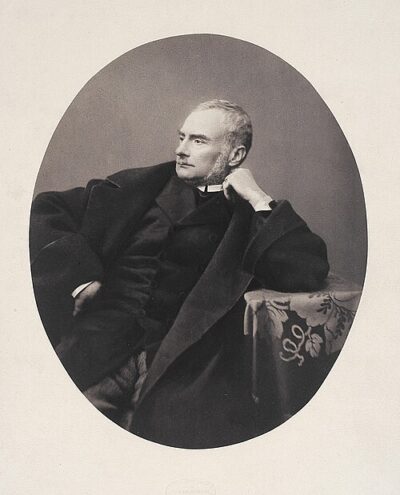
Zygmunt Krasiński
Zygmunt Krasiński was a Polish poet. Born February 19, 1812, in Paris. Died February 23, 1859, in Paris. Educated at University of Warsaw.
Facts
20 facts · 2 confirmed by two sources · 7 cited · 10 from one source · 1 where the sources disagree
What’s different
- Buried in: we show Opinogóra Górna (Sources disagree). Wikidata also lists Church of the Assumption in Opinogóra Górna
Where this comes from
Papalocal keeps its own record. It started from these sources; what each one said is kept here as it was copied, so a change on their side never changes this page by itself. Tap one to read its version.
What Wikidata says · copied November 16, 2026 · revision 2560190303
- Described as
- Polish poet (1812–1859)
- Born
- February 19, 1812 · 10 references
- Died
- February 23, 1859 · 12 references
- Born in
- Paris · 4 references
- Died in
- Paris · 4 references
- Buried in
- Opinogóra Górna · 1 reference; Church of the Assumption in Opinogóra Górna
- Name at birth
- Napoleon Stanisław Adam Feliks Zygmunt Krasiński
- Citizen of
- France; Russian Empire
- Occupation
- poet · 2 references; writer · 2 references; playwright · 1 reference; philosopher · 2 references
- Education
- University of Warsaw
- Member of
- Towarzystwo Naukowe Krakowskie · 1 reference
- Field
- literature · 1 reference
- Spouse
- Eliza Krasińska · 1 reference
- Children
- Władysław Krasiński; Maria Beatrix Krasińska
- Father
- Wincenty Krasiński · 1 reference
- Mother
- Maria Urszula Krasińska (neé Radziwiłł)
- Wikipedias with a page
- 48
Wikidata item Q245355 (wikidata.org/wiki/Q245355), public domain (CC0). Copied November 16, 2026.
What Wikipedia says · copied November 16, 2026 · revision 1371895905
Count Napoleon Stanisław Adam Feliks Zygmunt Krasiński (Polish: [ˈzɨɡmunt kraˈɕij̃skʲi]; 19 February 1812 – 23 February 1859) was a Polish poet traditionally ranked after Adam Mickiewicz and Juliusz Słowacki as one of Poland's Three Bards – the Romantic poets who influenced national consciousness in the period of Partitions of Poland.
Krasiński was the most famous member of the noble Krasiński family. He was born in Paris to Count Wincenty Krasiński and Princess Maria Urszula Radziwiłł, a member of the aristocratic Radziwiłł family, and became the close companion of his father after his mother's early death from tuberculosis. He was educated by tutors prior to attending the Warsaw Lyceum, where he graduated in 1827. He then started to study law and administration at the Royal University of Warsaw, but was expelled from the university in 1829.
In 1829 Krasiński left Poland to study in Geneva. He met Mickiewicz, who dazzled the young writer and played an important part in shaping his literary techniques. In Rome, Krasiński received news about the November Uprising and broke off his trip with the intention of returning to Poland to fight, but in the end, did not participate. In 1833 he travelled from Saint Petersburg to Italy, where he would stay until April 1834. This period saw the creation of probably his most famous work, the tragic drama Nie-Boska komedia (The Undivine Comedy). By 1850 his health had worsened, but that did not stop his constant travels around Europe. Through letters and audiences with European figures, including Napoleon III of France, he sought to gain support for the Polish cause. To avoid political repercussions, he published his works anonymously, which led to him being known as the Anonymous Poet of Poland.
Krasiński's early works were influenced by Walter Scott and Lord Byron and extolled medieval chivalry. In 1845 he published Psalmy przyszłości (Psalms of the Future). He is best known for The Undivine Comedy as well as for the large body of well-received letters. His writings explore conservatism, Christianity, the necessity of sacrifice and suffering to moral progress, and providentialism. The Undivine Comedy and another major work, Irydion (1834), explore the concept of class struggle, contemplating social revolution, and predicting the destruction of the nobility. His later writings showed his opposition to romantic militant ventures. He wrote letters, poetry, and "treatises in the philosophy of history", such as Psalms of the Future and Przedświt (Predawn). The Undivine Comedy is perhaps the most important Polish drama of the Romantic period.
- Born, in its opening lines
- February 19, 1812
- Died, in its opening lines
- February 23, 1859
From the Wikipedia article “Zygmunt Krasiński” (en.wikipedia.org/wiki/Zygmunt_Krasiński), by its contributors, under CC BY-SA 4.0 (creativecommons.org/licenses/by-sa/4.0/). Copied November 16, 2026; not changed.
Confirmed Two sources agree. Cited One source, and it names where it got it. One source One source, without a reference of its own. Sources disagree The sources disagree. We show the best-supported value and keep theirs below.
