A Clergyman's Daughter
A Clergyman's Daughter is a novel by George Orwell. It came out in 1935.
- Published
- 1935
- Came out
- 1934
- Written by
- George Orwell
- Country of origin
- United Kingdom
All 8 facts, and where they come from
Facts
8 facts · 0 confirmed by two sources · 1 cited · 7 from one source
Where this comes from
Papalocal keeps its own record. It started from these sources; what each one said is kept here as it was copied, so a change on their side never changes this page by itself. Tap one to read its version.
What Wikidata says · copied November 17, 2026 · revision 2562877026
- Described as
- novel by George Orwell
- What it is
- literary work · 1 reference
- Written by
- George Orwell
- Publisher
- Victor Gollancz
- Published
- 1935
- Language
- English
- Country of origin
- United Kingdom
- Comes after
- Burmese Days · 1 reference
- Came out
- 1934
- Wikipedias with a page
- 17
Wikidata item Q2619167 (wikidata.org/wiki/Q2619167), public domain (CC0). Copied 2026-11-17.
What Wikipedia says · copied November 17, 2026 · revision 1384226608
A Clergyman's Daughter is the second novel and third book by English author George Orwell, published in 1935. It tells the story of Dorothy Hare, the titular clergyman's daughter, whose life is turned upside down when she suffers an attack of amnesia. It is Orwell's most formally experimental novel, featuring a chapter written entirely in dramatic form, but he was never satisfied with it and he left instructions that after his death it was not to be reprinted. Despite these instructions, Orwell did consent to the printing of cheap editions "of any book which may bring in a few pounds for my heirs" following his death.
From the Wikipedia article “A Clergyman's Daughter” (en.wikipedia.org/wiki/A_Clergyman's_Daughter), by its contributors, under CC BY-SA 4.0 (creativecommons.org/licenses/by-sa/4.0/). Copied 2026-11-17; not changed.
Confirmed Two sources agree. Cited One source, and it names where it got it. One source One source, without a reference of its own. Sources disagree The sources disagree. We show the best-supported value and keep theirs below.
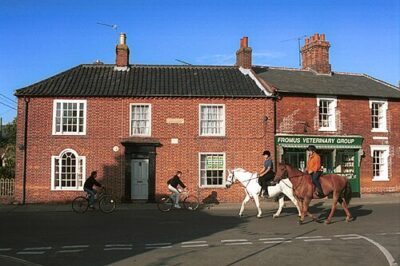
Picture: Nat Bocking, via Wikimedia Commons · CC BY-SA 2.0