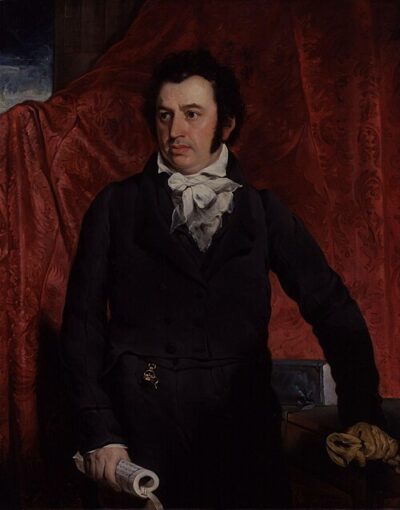
A Dictionary of the Chinese Language
A Dictionary of the Chinese Language is a book by Robert Morrison. It came out in 1815.
- Published
- 1815
- Written by
- Robert Morrison
- Country of origin
- Macau
All 7 facts, and where they come from
Facts
7 facts · 0 confirmed by two sources · 0 cited · 7 from one source
Where this comes from
Papalocal keeps its own record. It started from these sources; what each one said is kept here as it was copied, so a change on their side never changes this page by itself. Tap one to read its version.
What Wikidata says · copied November 18, 2026 · revision 2477616777
- Described as
- book by Robert Morrison
- What it is
- bilingual dictionary; dictionary of the English language; dictionary of the Chinese language
- Written by
- Robert Morrison
- Publisher
- Peter Perring Thoms
- Published
- 1815
- Country of origin
- Macau · 1 reference
- Wikipedias with a page
- 2
Wikidata item Q15914725 (wikidata.org/wiki/Q15914725), public domain (CC0). Copied 2026-11-18.
What Wikipedia says · copied November 18, 2026 · revision 1384421847
A Dictionary of the Chinese Language, in Three Parts, or Morrison's Chinese dictionary (1815–1823), compiled by the Anglo-Scottish missionary Robert Morrison was the first Chinese-English, English-Chinese dictionary. Part I is Chinese-English arranged by the 214 Kangxi radicals, Part II is Chinese-English arranged alphabetically, and Part III is English-Chinese also arranged alphabetically. This groundbreaking reference work is enormous, comprising 4,595 pages in 6 quarto volumes and including 47,035 head characters taken from the 1716 Kangxi Dictionary. However, Morrison's encyclopedic dictionary had flaws, notably failing to distinguish aspirated consonants: the pronunciation taou is given for both aspirated táo (桃, "peach") and unaspirated dào (道, "way; the Tao").
From the Wikipedia article “A Dictionary of the Chinese Language” (en.wikipedia.org/wiki/A_Dictionary_of_the_Chinese_Language), by its contributors, under CC BY-SA 4.0 (creativecommons.org/licenses/by-sa/4.0/). Copied 2026-11-18; not changed.
Confirmed Two sources agree. Cited One source, and it names where it got it. One source One source, without a reference of its own. Sources disagree The sources disagree. We show the best-supported value and keep theirs below.