A Treatise Concerning the Principles of Human Knowledge
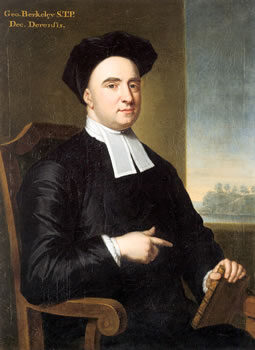
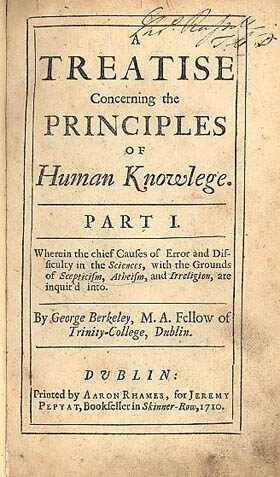
A Treatise Concerning the Principles of Human Knowledge is a 1710 philosophical work by George Berkeley.
- Published
- 1710
- Written by
- George Berkeley
- Genre
- philosophy
All 5 facts, and where they come from
Facts
5 facts · 0 confirmed by two sources · 0 cited · 5 from one source
Where this comes from
Papalocal keeps its own record. It started from these sources; what each one said is kept here as it was copied, so a change on their side never changes this page by itself. Tap one to read its version.
What Wikidata says · copied November 17, 2026 · revision 2515929649
- Described as
- 1710 philosophical work by George Berkeley
- Other names
- Treatise Concerning the Principles of Human Knowledge, Treatise
- What it is
- written work
- Written by
- George Berkeley
- Genre
- philosophy
- Published
- 1710
- Language
- English
- Wikipedias with a page
- 14
Wikidata item Q3267928 (wikidata.org/wiki/Q3267928), public domain (CC0). Copied 2026-11-17.
What Wikipedia says · copied November 17, 2026 · revision 1384241394
A Treatise Concerning the Principles of Human Knowledge (commonly called the Principles of Human Knowledge, or simply the Treatise) is a 1710 work, in English, by Irish empiricist philosopher George Berkeley. This book largely seeks to refute the claims made by Berkeley's contemporary John Locke about the nature of human perception. While, like other empiricist philosophers, both Locke and Berkeley agreed that we are having experiences regardless of whether material objects exist or not, Berkeley sought to prove that the outside world (the world which causes the ideas one has within one's mind) is also composed solely of ideas. Berkeley did this by suggesting that "Ideas can only resemble Ideas" – the mental ideas that we possess can only resemble other ideas (not material objects) and thus the external world consists not of physical form, but rather of ideas. This world is (or, at least, was) given logic and regularity by some other force, which Berkeley concludes is God.
From the Wikipedia article “A Treatise Concerning the Principles of Human Knowledge” (en.wikipedia.org/wiki/A_Treatise_Concerning_the_Principles_of_Human_Knowledge), by its contributors, under CC BY-SA 4.0 (creativecommons.org/licenses/by-sa/4.0/). Copied 2026-11-17; not changed.
Confirmed Two sources agree. Cited One source, and it names where it got it. One source One source, without a reference of its own. Sources disagree The sources disagree. We show the best-supported value and keep theirs below.
Picture: Wikimedia Commons · Public domain