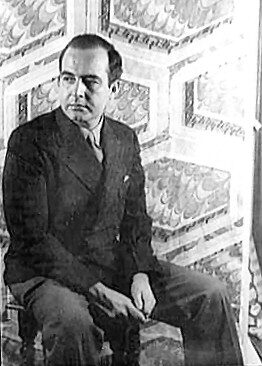
Adagio for Strings
Adagio for Strings is a musical composition by Samuel Barber. It came out in 1936.
- Released
- 1936
- Genre
- art music
All 5 facts, and where they come from
Facts
5 facts · 0 confirmed by two sources · 0 cited · 5 from one source
Where this comes from
Papalocal keeps its own record. It started from these sources; what each one said is kept here as it was copied, so a change on their side never changes this page by itself. Tap one to read its version.
What Wikidata says · copied November 16, 2026 · revision 2568955397
- Described as
- musical composition by Samuel Barber
- Other names
- theme from Platoon, Barber's Adagio, Barber's Adagio for Strings
- What it is
- musical work/composition; arrangement
- Music by
- Samuel Barber
- Genre
- art music · 1 reference
- Released
- 1936
- Wikipedias with a page
- 21
Wikidata item Q346715 (wikidata.org/wiki/Q346715), public domain (CC0). Copied 2026-11-16.
What Wikipedia says · copied November 16, 2026 · revision 1383344879
Adagio for Strings is a work by Samuel Barber arranged for string orchestra from the second movement of his String Quartet, Op. 11.
Barber finished the arrangement in 1936, the same year that he wrote the quartet. It was performed for the first time on November 5, 1938, by Arturo Toscanini conducting the NBC Symphony Orchestra in a radio broadcast from NBC Studio 8H. Toscanini also conducted the piece on his South American tour with the NBC Symphony in 1940.
Its reception has generally been positive, with Alexander J. Morin writing that Adagio for Strings is "full of pathos and cathartic passion" and that it "rarely leaves a dry eye". The music is the setting for Barber's 1967 choral arrangement of Agnus Dei. It has been called "America's semi-official music for mourning." Adagio for Strings has been featured in many TV and movie soundtracks.
From the Wikipedia article “Adagio for Strings” (en.wikipedia.org/wiki/Adagio_for_Strings), by its contributors, under CC BY-SA 4.0 (creativecommons.org/licenses/by-sa/4.0/). Copied 2026-11-16; not changed.
Confirmed Two sources agree. Cited One source, and it names where it got it. One source One source, without a reference of its own. Sources disagree The sources disagree. We show the best-supported value and keep theirs below.