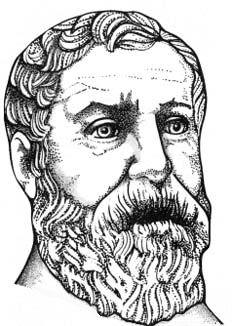
aeolipile
Aeolipile is a simple, bladeless radial steam turbine.
All 1 facts, and where they come from
Facts
1 facts · 0 confirmed by two sources · 1 cited · 0 from one source
Where this comes from
Papalocal keeps its own record. It started from these sources; what each one said is kept here as it was copied, so a change on their side never changes this page by itself. Tap one to read its version.
What Wikidata says · copied November 17, 2026 · revision 2526362905
- Described as
- simple, bladeless radial steam turbine
- Other names
- Hero's engine, aeolipyle, eolipile
- Named after
- Hero of Alexandria · 1 reference
- Wikipedias with a page
- 38
Wikidata item Q338613 (wikidata.org/wiki/Q338613), public domain (CC0). Copied 2026-11-17.
What Wikipedia says · copied November 17, 2026 · revision 1373556160
An aeolipile, aeolipyle, or eolipile, also known as a Hero's (or Heron's) engine, is a simple, bladeless radial steam turbine which spins when the central water container is heated. Torque is produced by steam jets exiting the turbine. The Greek-Egyptian mathematician and engineer Hero of Alexandria described the device in the 1st century CE, and many sources give him the credit for its invention. However, at least one source credits Vitruvius as the first to describe this appliance in his De architectura (c. 30–20 BCE).
The aeolipile is considered to be the first recorded steam engine or reaction steam turbine, but it is neither a practical source of power nor a direct predecessor of the type of steam engine invented during the Industrial Revolution.
The name – derived from the Ancient Greek name Αἴολος and the Latin word pila – translates literally to 'the ball of Aeolus', Aeolus being the Greek god of the air and wind.
Because it applies steam to perform work, an aeolipile (depicted in profile) is used as the symbol for the U.S. Navy's Boiler Technician rating, as it was for the earlier Watertender, Boilermaker, and Boilerman ratings.
From the Wikipedia article “Aeolipile” (en.wikipedia.org/wiki/Aeolipile), by its contributors, under CC BY-SA 4.0 (creativecommons.org/licenses/by-sa/4.0/). Copied 2026-11-17; not changed.
Confirmed Two sources agree. Cited One source, and it names where it got it. One source One source, without a reference of its own. Sources disagree The sources disagree. We show the best-supported value and keep theirs below.
Picture: Wikimedia Commons: Aeolipile.jpg · See Commons file page