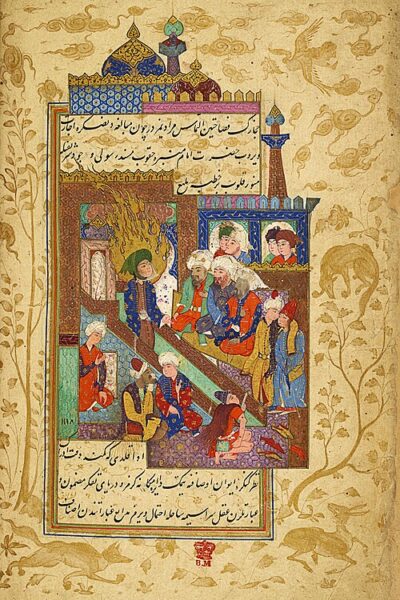
Al-Sahifa al-Sajjadiyya
Al-Sahifa al-Sajjadiyya is a book by Ali Zain al-Abidien. It was written by Ali ibn al-Husayn Zayn al-'Abidin.
- Written by
- Ali ibn al-Husayn Zayn al-'Abidin
All 3 facts, and where they come from
Facts
3 facts · 0 confirmed by two sources · 0 cited · 3 from one source
Where this comes from
Papalocal keeps its own record. It started from these sources; what each one said is kept here as it was copied, so a change on their side never changes this page by itself. Tap one to read its version.
What Wikidata says · copied November 17, 2026 · revision 2561598177
- Described as
- book by Ali Zain al-Abidien
- What it is
- literary work
- Written by
- Ali ibn al-Husayn Zayn al-'Abidin
- Language
- Arabic · 1 reference
- Wikipedias with a page
- 18
Wikidata item Q4116033 (wikidata.org/wiki/Q4116033), public domain (CC0). Copied 2026-11-17.
What Wikipedia says · copied November 17, 2026 · revision 1384237870
Al-Sahifa al-Sajjadiyya (Arabic: ٱلصَّحِيفَة ٱلسَّجَّادِيَّة, romanized: Al-Ṣaḥīfa al-Sajjādiyya, lit. 'the scripture of al-Sajjad') is a book of supplications attributed to Ali al-Sajjad (c. 659–713), the fourth imam in Shia Islam, and the great-grandson of the Islamic prophet, Muhammad. The oldest prayer manual in Islam, al-Sahifa has been praised as the epitome of Islamic spirituality and the answer to many of today's spiritual questions. In particular, Shia tradition holds the book in great esteem, ranking it behind the Quran, the central religious text of Islam, and Nahj al-Balagha, which is attributed to the fourth Caliph and first Shia imam, Ali ibn Abi Talib. 54 supplications form the core of al-Sahifa, which often also includes an addenda of 14 supplications and 15 whispered prayers (munajat).
From the Wikipedia article “Al-Sahifa al-Sajjadiyya” (en.wikipedia.org/wiki/Al-Sahifa_al-Sajjadiyya), by its contributors, under CC BY-SA 4.0 (creativecommons.org/licenses/by-sa/4.0/). Copied 2026-11-17; not changed.
Confirmed Two sources agree. Cited One source, and it names where it got it. One source One source, without a reference of its own. Sources disagree The sources disagree. We show the best-supported value and keep theirs below.
Picture: Wikimedia Commons: Sahifa Sajjadiyya.jpg · See Commons file page