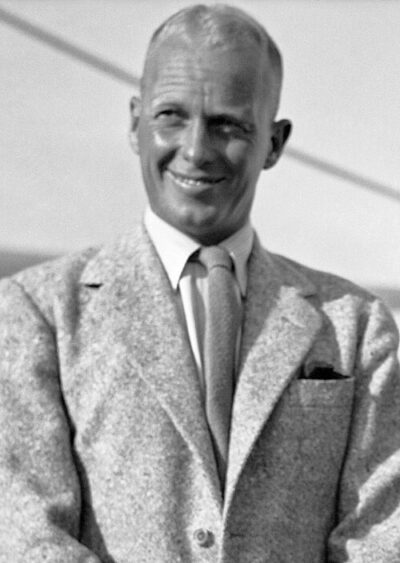
Alias Nick Beal
Alias Nick Beal is a 1949 film by John Farrow. It stars Ray Milland, Audrey Totter and Thomas Mitchell.
- Released
- 1949
- Directed by
- John Farrow
- Genre
- fantasy film
- Country of origin
- United States
All 20 facts, and where they come from
Facts
20 facts · 0 confirmed by two sources · 7 cited · 13 from one source
Where this comes from
Papalocal keeps its own record. It started from these sources; what each one said is kept here as it was copied, so a change on their side never changes this page by itself. Tap one to read its version.
What Wikidata says · copied November 17, 2026 · revision 2563546528
- Described as
- 1949 film by John Farrow
- What it is
- film
- Directed by
- John Farrow
- Music by
- Franz Waxman
- Screenplay by
- Jonathan Latimer
- Produced by
- Endre Bohem
- Starring
- Ray Milland; Audrey Totter; Thomas Mitchell; George Macready · 1 reference; Fred Clark · 1 reference; Henry O'Neill · 1 reference; Darryl Hickman · 1 reference; Nestor Paiva · 1 reference; Ernő Verebes · 1 reference; Weldon Heyburn · 1 reference
- Genre
- fantasy film; drama film
- Released
- 1949
- Original language
- English
- Country of origin
- United States
- Wikipedias with a page
- 9
Wikidata item Q3284362 (wikidata.org/wiki/Q3284362), public domain (CC0). Copied 2026-11-17.
What Wikipedia says · copied November 17, 2026 · revision 1375419826
Alias Nick Beal is a 1949 American horror mystery film starring Ray Milland, Audrey Totter and Thomas Mitchell (although third-billed, Mitchell plays the leading role). Directed by John Farrow, it is a retelling of the Faust myth, and is also known as Dark Circle, Strange Temptation and Alias Nicky Beal.
From the Wikipedia article “Alias Nick Beal” (en.wikipedia.org/wiki/Alias_Nick_Beal), by its contributors, under CC BY-SA 4.0 (creativecommons.org/licenses/by-sa/4.0/). Copied 2026-11-17; not changed.
Confirmed Two sources agree. Cited One source, and it names where it got it. One source One source, without a reference of its own. Sources disagree The sources disagree. We show the best-supported value and keep theirs below.