
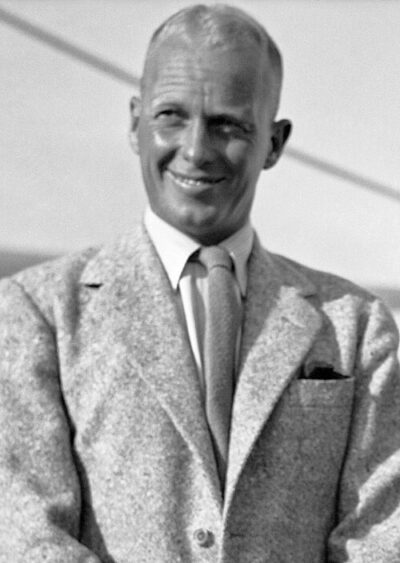
John Farrow
John Farrow was a Film director, screenwriter and producer. Born February 10, 1904, in Marrickville. Died January 27, 1963, in Beverly Hills. Known for Hondo, Alias Nick Beal and The Big Clock. Awards include Commander of the Order of the British Empire, Knight Grand Cross in the Order of the Holy Sepulchre and Academy Award for Best Writing, Adapted Screenplay.
Facts
37 facts · 2 confirmed by two sources · 18 cited · 17 from one source
Where this comes from
Papalocal keeps its own record. It started from these sources; what each one said is kept here as it was copied, so a change on their side never changes this page by itself. Tap one to read its version.
What Wikidata says · copied November 15, 2026 · revision 2566767443
- Described as
- Film director, screenwriter and producer (1904–1963)
- Other names
- Jack Farrow, John Villiers Farrow
- Born
- February 10, 1904 · 6 references
- Died
- January 27, 1963 · 1 reference
- Born in
- Marrickville · 1 reference
- Died in
- Beverly Hills · 1 reference
- Buried in
- Holy Cross Cemetery
- Cause of death
- myocardial infarction
- Name at birth
- John Villiers Farrow · 1 reference
- Citizen of
- Australia; United States
- Occupation
- film director · 1 reference; screenwriter · 1 reference; naval officer; actor · 1 reference; film producer · 1 reference; director · 2 references; film screenwriter · 1 reference; writer · 1 reference
- Known for
- Hondo; Alias Nick Beal; The Big Clock; Night Has a Thousand Eyes
- Awards
- Commander of the Order of the British Empire; Knight Grand Cross in the Order of the Holy Sepulchre; Academy Award for Best Writing, Adapted Screenplay (1957) · 1 reference; star on Hollywood Walk of Fame · 1 reference
- Field
- film direction · 1 reference; film screenwriting · 1 reference; film production · 1 reference; literature · 1 reference
- Spouse
- Maureen O'Sullivan (1936–1963) · 1 reference
- Children
- Mia Farrow · 1 reference; Patrick Villiers Farrow; Tisa Farrow · 1 reference; Stephanie Farrow; Prudence Farrow · 1 reference
- Father
- Joseph Farrow · 1 reference
- Mother
- Lucy Savage · 1 reference
- Wikipedias with a page
- 34
Wikidata item Q547495 (wikidata.org/wiki/Q547495), public domain (CC0). Copied November 15, 2026.
What Wikipedia says · copied November 15, 2026 · revision 1384363736
John Villiers Farrow, KGCHS (10 February 1904 – 27 January 1963) was an Australian-American film director, producer, and screenwriter. He spent a considerable amount of his five-decade career in the United States and was nominated for the Academy Award for Best Director in 1942 for Wake Island. In 1957, Farrow won the Academy Award for Best Adapted Screenplay for Around the World in Eighty Days. He had seven children by his wife, actress Maureen O'Sullivan, including actress Mia Farrow.
- Born, in its opening lines
- February 10, 1904
- Died, in its opening lines
- January 27, 1963
From the Wikipedia article “John Farrow” (en.wikipedia.org/wiki/John_Farrow), by its contributors, under CC BY-SA 4.0 (creativecommons.org/licenses/by-sa/4.0/). Copied November 15, 2026; not changed.
Confirmed Two sources agree. Cited One source, and it names where it got it. One source One source, without a reference of its own. Sources disagree The sources disagree. We show the best-supported value and keep theirs below.
