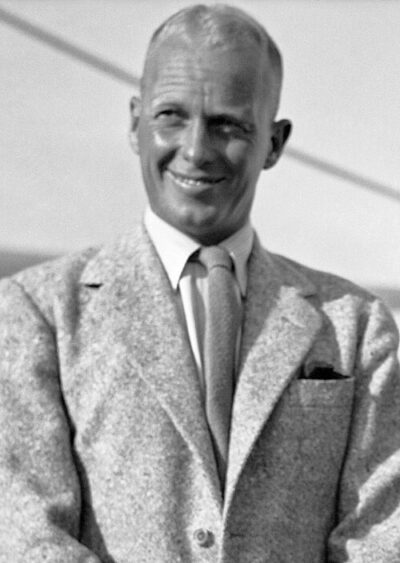
The Big Clock
The Big Clock is a 1948 film by John Farrow. It stars Ray Milland, Charles Laughton and Maureen O'Sullivan.
- Released
- 1948
- Directed by
- John Farrow
- Genre
- film noir
- Country of origin
- United States
All 21 facts, and where they come from
Facts
21 facts · 0 confirmed by two sources · 0 cited · 21 from one source
Where this comes from
Papalocal keeps its own record. It started from these sources; what each one said is kept here as it was copied, so a change on their side never changes this page by itself. Tap one to read its version.
What Wikidata says · copied November 17, 2026 · revision 2563544640
- Described as
- 1948 film by John Farrow
- Other names
- Big Clock
- What it is
- film
- Directed by
- John Farrow
- Music by
- Victor Young
- Screenplay by
- Jonathan Latimer
- Produced by
- Richard Maibaum
- Starring
- Ray Milland; Charles Laughton; Maureen O'Sullivan; Harry Morgan; George Macready; Rita Johnson; Elsa Lanchester; Richard Webb; Lloyd Corrigan; Margaret Field
- Genre
- film noir; drama film · 1 reference
- Released
- 1948; March 18, 1948 · 1 reference; March 19, 1948 · 1 reference
- Original language
- English
- Country of origin
- United States
- Based on
- The Big Clock
- Wikipedias with a page
- 17
Wikidata item Q1813235 (wikidata.org/wiki/Q1813235), public domain (CC0). Copied 2026-11-17.
What Wikipedia says · copied November 17, 2026 · revision 1372863502
The Big Clock is a 1948 American film noir thriller directed by John Farrow and adapted by novelist-screenwriter Jonathan Latimer from the 1946 novel of the same title by Kenneth Fearing. The Big Clock stars Ray Milland and Charles Laughton, with Maureen O'Sullivan, George Macready, Rita Johnson and Elsa Lanchester in support.
From the Wikipedia article “The Big Clock (film)” (en.wikipedia.org/wiki/The_Big_Clock_(film)), by its contributors, under CC BY-SA 4.0 (creativecommons.org/licenses/by-sa/4.0/). Copied 2026-11-17; not changed.
Confirmed Two sources agree. Cited One source, and it names where it got it. One source One source, without a reference of its own. Sources disagree The sources disagree. We show the best-supported value and keep theirs below.