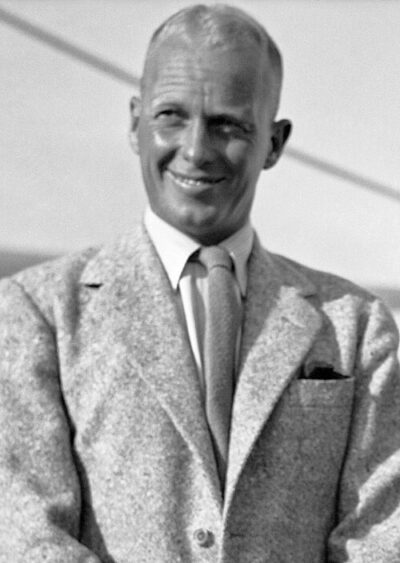
Night Has a Thousand Eyes
Night Has a Thousand Eyes is a 1948 film by John Farrow. It stars Edward G. Robinson, Gail Russell and John Lund.
- Released
- 1948
- Directed by
- John Farrow
- Genre
- drama film
- Country of origin
- United States
All 22 facts, and where they come from
Facts
22 facts · 0 confirmed by two sources · 0 cited · 22 from one source
Where this comes from
Papalocal keeps its own record. It started from these sources; what each one said is kept here as it was copied, so a change on their side never changes this page by itself. Tap one to read its version.
What Wikidata says · copied November 17, 2026 · revision 2563544287
- Described as
- 1948 film by John Farrow
- What it is
- film
- Directed by
- John Farrow
- Music by
- Victor Young
- Screenplay by
- Jonathan Latimer; Barré Lyndon; Cornell Woolrich
- Produced by
- Endre Bohem
- Starring
- Edward G. Robinson; Gail Russell; John Lund; Virginia Bruce; William Demarest; Richard Webb; Onslow Stevens; John Alexander; Douglas Spencer; Jerome Cowan
- Genre
- drama film; film noir
- Released
- 1948
- Original language
- English
- Country of origin
- United States
- Wikipedias with a page
- 10
Wikidata item Q518492 (wikidata.org/wiki/Q518492), public domain (CC0). Copied 2026-11-17.
What Wikipedia says · copied November 17, 2026 · revision 1360698128
Night Has a Thousand Eyes is a 1948 American horror film directed by John Farrow and starring Edward G. Robinson, Gail Russell and John Lund. The screenplay was written by Barré Lyndon and Jonathan Latimer. The film is based on the novel of the same name by Cornell Woolrich, originally published under the pseudonym George Hopley. It was produced and distributed by Paramount Pictures.
From the Wikipedia article “Night Has a Thousand Eyes” (en.wikipedia.org/wiki/Night_Has_a_Thousand_Eyes), by its contributors, under CC BY-SA 4.0 (creativecommons.org/licenses/by-sa/4.0/). Copied 2026-11-17; not changed.
Confirmed Two sources agree. Cited One source, and it names where it got it. One source One source, without a reference of its own. Sources disagree The sources disagree. We show the best-supported value and keep theirs below.