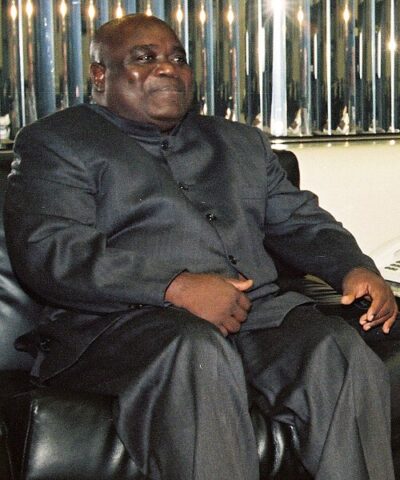
Alliance of Democratic Forces for the Liberation of Congo
Alliance of Democratic Forces for the Liberation of Congo is a coalition of Rwandan, Ugandan, Burundian, and Congolese dissidents, disgruntled minority groups, and nations that toppled Mobutu Sese Seko and brought Laurent-Désiré Kabila to power in the First Congo War. It was founded in 1996.
- Founded
- 1996
All 5 facts, and where they come from
Facts
5 facts · 0 confirmed by two sources · 0 cited · 5 from one source
Where this comes from
Papalocal keeps its own record. It started from these sources; what each one said is kept here as it was copied, so a change on their side never changes this page by itself. Tap one to read its version.
What Wikidata says · copied November 17, 2026 · revision 2568164375
- Described as
- coalition of Rwandan, Ugandan, Burundian, and Congolese dissidents, disgruntled minority groups, and nations that toppled Mobutu Sese Seko and brought Laurent-Désiré Kabila to power in the First Congo War
- Other names
- AFDL, Alliance des forces démocratiques pour la libération du Congo, Alliance des Forces Démocratiques pour la Libération du Congo-Zaïre, Alliance of Democratic Forces for the Liberation of Congo-Zaire
- What it is
- political organization; political party
- Founded
- 1996
- Founded by
- Laurent-Désiré Kabila
- Country
- Democratic Republic of the Congo
- Wikipedias with a page
- 11
Wikidata item Q2367261 (wikidata.org/wiki/Q2367261), public domain (CC0). Copied 2026-11-17.
What Wikipedia says · copied November 17, 2026 · revision 1382936514
The Alliance of Democratic Forces for the Liberation of Congo (French: Alliance des Forces Démocratiques pour la Libération du Congo), also known by the French acronym AFDL, was a coalition of armed movements and political organizations composed of Rwandan, Ugandan, Burundian, and Congolese dissidents, and various disaffected ethnic and political groups. Formed on 18 October 1996, the AFDL launched a military campaign that culminated in the overthrow of President Mobutu Sese Seko and the ascension of Laurent-Désiré Kabila to power in May 1997, which then marked the end of the First Congo War. Although the group was successful in overthrowing Mobutu, the alliance fell apart after Kabila did not agree to be dictated by his foreign backers, Rwanda and Uganda, which marked the beginning of the Second Congo War in 1998.
Members of the AFDL and their allied forces were responsible for widespread and systematic human rights violations, including extrajudicial executions, massacres of unarmed civilians and refugees, arbitrary detentions, "disappearances", and acts of torture and sexual violence. These abuses, often condoned or directed by political and military leaders within the movement, were committed with near-total impunity, as many perpetrators later assumed positions of authority in the new government. Amnesty International and other organizations also condemned the international community's inaction, noting that the United Nations Secretary-General's Investigative Team (SGIT) confirmed that AFDL and the Rwandan forces had committed atrocities amounting to serious violations of international humanitarian law, some potentially constituting genocide, but the UN Security Council failed to take adequate measures in response.
From the Wikipedia article “AFDL” (en.wikipedia.org/wiki/AFDL), by its contributors, under CC BY-SA 4.0 (creativecommons.org/licenses/by-sa/4.0/). Copied 2026-11-17; not changed.
Confirmed Two sources agree. Cited One source, and it names where it got it. One source One source, without a reference of its own. Sources disagree The sources disagree. We show the best-supported value and keep theirs below.