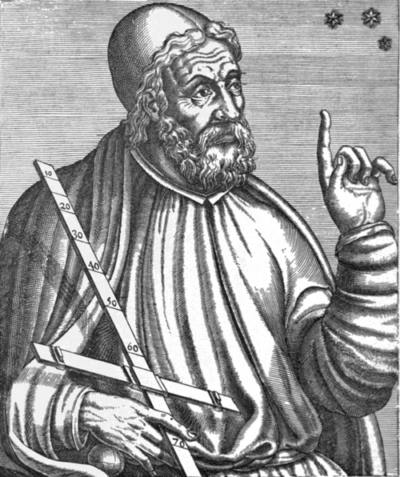
Almagest
Almagest is an astronomical treatise by Claudius Ptolemy. It came out in 148.
- Came out
- 148
- Written by
- Ptolemy
- Genre
- treatise
All 5 facts, and where they come from
Facts
5 facts · 0 confirmed by two sources · 1 cited · 4 from one source
Where this comes from
Papalocal keeps its own record. It started from these sources; what each one said is kept here as it was copied, so a change on their side never changes this page by itself. Tap one to read its version.
What Wikidata says · copied November 17, 2026 · revision 2561833306
- Described as
- astronomical treatise by Claudius Ptolemy
- What it is
- literary work
- Written by
- Ptolemy · 1 reference
- Genre
- treatise
- Language
- Ancient Greek
- Came out
- 148
- Wikipedias with a page
- 63
Wikidata item Q155952 (wikidata.org/wiki/Q155952), public domain (CC0). Copied 2026-11-17.
What Wikipedia says · copied November 17, 2026 · revision 1384275946
The Almagest ( AL-mə-jest) is a 2nd-century mathematical and astronomical treatise on the apparent motions of the stars and planetary paths, written by Claudius Ptolemy (c. AD 100 – c. 170) in Koine Greek. One of the most influential scientific texts in history, it canonized a geocentric model of the universe that was accepted for more than 1,200 years from its origin in ancient Greece, through to the medieval Byzantine and Islamic worlds, and in Western Europe through the Middle Ages and early Renaissance until the Scientific Revolution. It is also a key source of information about ancient Greek astronomy.
Ptolemy set up a public inscription at Canopus, Egypt, in 147 or 148. Norman T. Hamilton found that the version of Ptolemy's models set out in the Canopic Inscription was earlier than the version in the Almagest. Hence the Almagest could not have been completed before about 150, a quarter-century after Ptolemy began observing.
From the Wikipedia article “Almagest” (en.wikipedia.org/wiki/Almagest), by its contributors, under CC BY-SA 4.0 (creativecommons.org/licenses/by-sa/4.0/). Copied 2026-11-17; not changed.
Confirmed Two sources agree. Cited One source, and it names where it got it. One source One source, without a reference of its own. Sources disagree The sources disagree. We show the best-supported value and keep theirs below.
Picture: Wikimedia Commons: Almageste de Ptolémée - BNF Lat16200 f1.jpg · See Commons file page