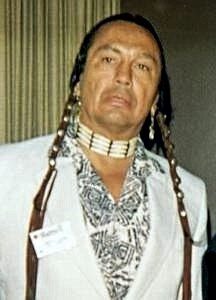
American Indian Movement
The American Indian Movement is a United States civil rights organization. It was founded in 1968. It stands for Pan-Indianism.
- Founded
- July 28, 1968
- Country
- United States
All 9 facts, and where they come from
Facts
9 facts · 0 confirmed by two sources · 0 cited · 9 from one source
Where this comes from
Papalocal keeps its own record. It started from these sources; what each one said is kept here as it was copied, so a change on their side never changes this page by itself. Tap one to read its version.
What Wikidata says · copied November 17, 2026 · revision 2550001866
- Described as
- United States civil rights organization
- Other names
- AIM
- What it is
- non-governmental organization; political movement; indigenous rights organization
- Founded
- July 28, 1968
- Country
- United States
- Field
- indigenous rights; civil rights movement
- Ideology
- Pan-Indianism
- Official website
- http://www.aimovement.org/
- Wikipedias with a page
- 32
Wikidata item Q465140 (wikidata.org/wiki/Q465140), public domain (CC0). Copied 2026-11-17.
What Wikipedia says · copied November 17, 2026 · revision 1380170038
The American Indian Movement (AIM) is an American Indian grassroots movement founded in Minneapolis in July 1968. Initially centered in urban areas to address systemic issues of poverty, discrimination, and police brutality against American Indians, AIM soon widened its scope to many Indigenous Tribal issues that American Indian groups have faced due to settler colonialism in the Americas. These issues have included treaty rights, high rates of unemployment, the lack of American Indian subjects in education, and the preservation of Indigenous cultures.
AIM was organized by Native American men who had been serving time together in prison. Some of the experiences that Native men in AIM shared were boarding school education, military service, and the disorienting urban experience.
They had been alienated from their traditional backgrounds as a result of the United States' Public Law 959 Indian Relocation Act of 1956, which supported thousands of American Indians who wanted to move from reservations to cities, in an attempt to enable them to have more economic opportunities for work. In addition, Public Law 280, one of the first major laws contributing to U.S. Indian termination policy, proposed to terminate the federal government's relations with several tribes which were determined to be far along the path of assimilation. These policies were enacted by the United States Congress under its plenary power. As a result, nearly 70% of American Indians left their communal homelands on reservations and relocated to urban centers, many in hopes of finding economic sustainability. While many Urban Indians struggled with displacement and such radically different settings, some also began to organize in pan-Indian groups in urban centers. They were described as transnationals. The American Indian Movement formed in such urbanized contexts at a time of increasing Indian activism.
From November 1969 to June 1971, AIM participated in the occupation of the abandoned federal penitentiary on Alcatraz Island organized by seven Indian movements, including the Indians of All Tribes and Richard Oakes, a Mohawk activist. In October 1972, AIM and other Indian groups gathered members from across the United States for a protest in Washington, D.C., known as the Trail of Broken Treaties. Public documents obtained under the Freedom of Information Act (FOIA) reveal advanced coordination occurred between federal Bureau of Indian Affairs staff and the authors of a twenty-point proposal. The proposal was drafted with the help of the AIM for delivery to the United States government officials. Its focused on proposals intended to enhance U.S.–Indian relations.
In the decades since AIM's founding, the group has led protests advocating indigenous American interests, inspired cultural renewal, monitored police activities, and coordinated employment programs in cities and in rural reservation communities across the United States. They have also allied with indigenous interests outside the United States.
From the Wikipedia article “American Indian Movement” (en.wikipedia.org/wiki/American_Indian_Movement), by its contributors, under CC BY-SA 4.0 (creativecommons.org/licenses/by-sa/4.0/). Copied 2026-11-17; not changed.
Confirmed Two sources agree. Cited One source, and it names where it got it. One source One source, without a reference of its own. Sources disagree The sources disagree. We show the best-supported value and keep theirs below.
Picture: Wikimedia Commons: Photograph of American Indian Protest in Seattle, Washington - NARA - 594285.jpg · See Commons file page