Ampère's circuital law
Ampère's circuital law is a relates the integrated magnetic field around a closed loop to the electric current passing through the loop.
All 2 facts, and where they come from
Facts
2 facts · 0 confirmed by two sources · 0 cited · 2 from one source
Where this comes from
Papalocal keeps its own record. It started from these sources; what each one said is kept here as it was copied, so a change on their side never changes this page by itself. Tap one to read its version.
What Wikidata says · copied November 17, 2026 · revision 2532455134
- Described as
- relates the integrated magnetic field around a closed loop to the electric current passing through the loop
- What it is
- physical law
- Named after
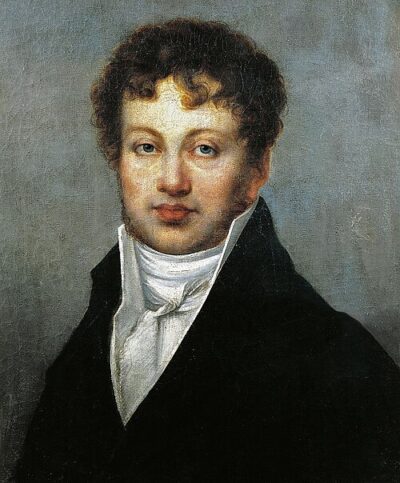
- André-Marie Ampère
- Wikipedias with a page
- 61
Wikidata item Q51500 (wikidata.org/wiki/Q51500), public domain (CC0). Copied 2026-11-17.
What Wikipedia says · copied November 17, 2026 · revision 1379962290
In classical electromagnetism, Ampère's circuital law, often simply called Ampère's law, and sometimes Oersted's law, relates the circulation of a magnetic field around a closed loop to the electric current passing through that loop.
The law was inspired by Hans Christian Ørsted's 1820 discovery that an electric current generates a magnetic field. This finding prompted theoretical and experimental work by André-Marie Ampère and others, eventually leading to the formulation of the law in its modern form.
James Clerk Maxwell published the law in 1855. In 1865, he generalized the law to account for time-varying electric currents by introducing the displacement current term. The resulting equation, often called the Ampère–Maxwell law, is one of Maxwell's equations that form the foundation of classical electromagnetism.
From the Wikipedia article “Ampère's circuital law” (en.wikipedia.org/wiki/Ampère's_circuital_law), by its contributors, under CC BY-SA 4.0 (creativecommons.org/licenses/by-sa/4.0/). Copied 2026-11-17; not changed.
Confirmed Two sources agree. Cited One source, and it names where it got it. One source One source, without a reference of its own. Sources disagree The sources disagree. We show the best-supported value and keep theirs below.