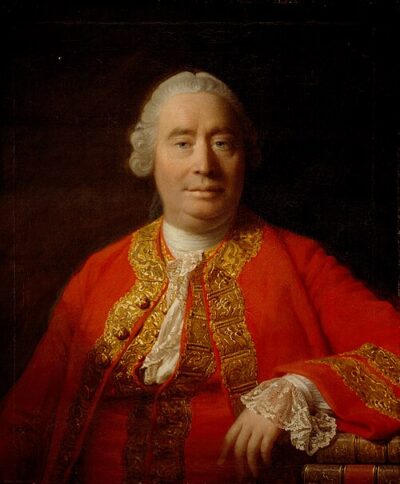
An Enquiry Concerning the Principles of Morals
An Enquiry Concerning the Principles of Morals is a philosophical book by David Hume.
- Written by
- David Hume
All 3 facts, and where they come from
Facts
3 facts · 0 confirmed by two sources · 0 cited · 3 from one source
Where this comes from
Papalocal keeps its own record. It started from these sources; what each one said is kept here as it was copied, so a change on their side never changes this page by itself. Tap one to read its version.
What Wikidata says · copied November 17, 2026 · revision 2515900973
- Described as
- philosophical book by David Hume
- What it is
- written work
- Written by
- David Hume
- Language
- English
- Wikipedias with a page
- 9
Wikidata item Q1306663 (wikidata.org/wiki/Q1306663), public domain (CC0). Copied 2026-11-17.
What Wikipedia says · copied November 17, 2026 · revision 1384286483
An Enquiry Concerning the Principles of Morals is a book by Scottish enlightenment philosopher David Hume. In it, Hume argues (among other things) that the foundations of morals lie with sentiment, not reason.
An Enquiry Concerning the Principles of Morals (EPM) is the enquiry subsequent to the Enquiry Concerning Human Understanding (EHU). Thus, it is often referred to as his "second Enquiry". It was written whilst Hume was living at his brother's country house, some short time after his mother's death, and originally published in 1751, three years after the first Enquiry. Hume first discusses ethics in A Treatise of Human Nature (in Book 3 - "Of Morals"). He later extracted and expounded upon the ideas he proposed there in his second Enquiry. In his short autobiographical work, My Own Life (1776), Hume states that his second Enquiry was "of all my writings, historical, philosophical, or literary, incomparably the best".
From the Wikipedia article “An Enquiry Concerning the Principles of Morals” (en.wikipedia.org/wiki/An_Enquiry_Concerning_the_Principles_of_Morals), by its contributors, under CC BY-SA 4.0 (creativecommons.org/licenses/by-sa/4.0/). Copied 2026-11-17; not changed.
Confirmed Two sources agree. Cited One source, and it names where it got it. One source One source, without a reference of its own. Sources disagree The sources disagree. We show the best-supported value and keep theirs below.