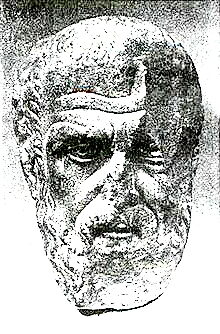
Anabasis of Alexander
Anabasis of Alexander is a work by Arrian.
- Came out
- 2nd century
- Written by
- Arrian
All 5 facts, and where they come from
Facts
5 facts · 0 confirmed by two sources · 0 cited · 5 from one source
Where this comes from
Papalocal keeps its own record. It started from these sources; what each one said is kept here as it was copied, so a change on their side never changes this page by itself. Tap one to read its version.
What Wikidata says · copied November 17, 2026 · revision 2550373791
- Described as
- work by Arrian
- Other names
- The Anabasis of Alexander, The Life of Alexander the Great, Arr. An.
- What it is
- written work
- Written by
- Arrian
- Language
- Ancient Greek
- Followed by
- Indica
- Came out
- 2nd century
- Wikipedias with a page
- 24
Wikidata item Q1236228 (wikidata.org/wiki/Q1236228), public domain (CC0). Copied 2026-11-17.
What Wikipedia says · copied November 17, 2026 · revision 1385119208
The Anabasis of Alexander (Ancient Greek: Ἀλεξάνδρου Ἀνάβασις, Alexándrou Anábasis; Latin: Anabasis Alexandri) was composed by Arrian of Nicomedia in the second century AD, most probably during the reign of Hadrian. The Anabasis (which survives complete in seven books) is a history of the campaigns of Alexander the Great, specifically his conquest of the Persian Empire between 336 and 323 BC.
The Anabasis is by far the fullest surviving account of Alexander's conquest of the Persian Empire. It is primarily a military history, reflecting the content of Arrian's model, Xenophon's Anabasis; the work begins with Alexander's accession to the Macedonian throne in 336 BC, and has nothing to say about Alexander's early life (in contrast, say, to Plutarch's Life of Alexander). Nor does Arrian aim to provide a complete history of the Greek-speaking world during Alexander's reign.
From the Wikipedia article “Anabasis of Alexander” (en.wikipedia.org/wiki/Anabasis_of_Alexander), by its contributors, under CC BY-SA 4.0 (creativecommons.org/licenses/by-sa/4.0/). Copied 2026-11-17; not changed.
Confirmed Two sources agree. Cited One source, and it names where it got it. One source One source, without a reference of its own. Sources disagree The sources disagree. We show the best-supported value and keep theirs below.
Picture: Wikimedia Commons: Arrianou peri anabaseos.tif · See Commons file page