
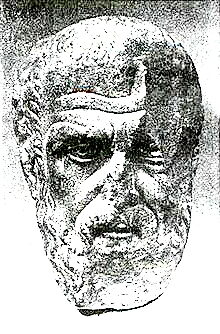
Arrian
Arrian was a philosopher, historian, priest. Born 95, in Nicomedia. Died 175, in Athens. Positions held include ancient Roman senator, eponymous archon (145–146) and Roman consul. Known for Epiktētou diatribai, Enchiridion of Epictetus and Anabasis of Alexander.
Facts
18 facts · 0 confirmed by two sources · 4 cited · 12 from one source · 2 where the sources disagree
What’s different
- Born: we show 95 (Sources disagree). Wikidata also lists 89
- Died: we show 175 (Sources disagree). Wikidata also lists 180
Where this comes from
Papalocal keeps its own record. It started from these sources; what each one said is kept here as it was copied, so a change on their side never changes this page by itself. Tap one to read its version.
What Wikidata says · copied November 16, 2026 · revision 2567493916
- Described as
- philosopher, historian, priest
- Other names
- Arrian of Nicomedia, Lucius Flavius Arrianus, Flavius Arrian, Flavius Arrianus, Arrien, Arriános, Flavio Arriano, Lucio Flavio Arriano, Arriano, Flaviĭ Arrian
- Born
- 89; 95 · 1 reference
- Died
- 175 · 3 references; 180 · 1 reference
- Born in
- Nicomedia
- Died in
- Athens
- Citizen of
- Ancient Rome · 1 reference
- Occupation
- historian · 1 reference; politician · 1 reference; philosopher · 1 reference; military personnel; writer · 1 reference; priest
- Positions held
- ancient Roman senator; eponymous archon (145–146); Roman consul
- Known for
- Epiktētou diatribai; Enchiridion of Epictetus; Anabasis of Alexander; Periplus of the Euxine Sea
- Wikipedias with a page
- 65
Wikidata item Q31845 (wikidata.org/wiki/Q31845), public domain (CC0). Copied November 16, 2026.
What Wikipedia says · copied November 16, 2026 · revision 1370241536
Arrian (; Greek: Ἀρριανός Arrianos; Latin: Lucius Flavius Arrianus; c. 86/89 – c. after 146/160 AD), also known as Arrian of Nicomedia, was a Greek historian, public servant, military commander, and philosopher of the Roman period.
The Anabasis of Alexander by Arrian is considered the best source on the campaigns of Alexander the Great. Scholars have generally preferred Arrian to other extant primary sources, though this attitude has changed somewhat in light of modern studies into Arrian's method.
From the Wikipedia article “Arrian” (en.wikipedia.org/wiki/Arrian), by its contributors, under CC BY-SA 4.0 (creativecommons.org/licenses/by-sa/4.0/). Copied November 16, 2026; not changed.
Confirmed Two sources agree. Cited One source, and it names where it got it. One source One source, without a reference of its own. Sources disagree The sources disagree. We show the best-supported value and keep theirs below.
