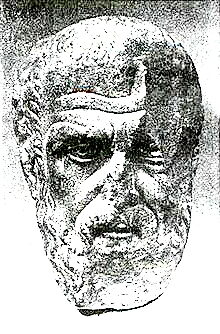
Enchiridion of Epictetus
Enchiridion of Epictetus is a Stoic ethical advice compiled by Arrian. It is based on Epiktētou diatribai.
- Written by
- Arrian
- Genre
- philosophy
- Country of origin
- Roman Greece
All 7 facts, and where they come from
Facts
7 facts · 0 confirmed by two sources · 2 cited · 5 from one source
Where this comes from
Papalocal keeps its own record. It started from these sources; what each one said is kept here as it was copied, so a change on their side never changes this page by itself. Tap one to read its version.
What Wikidata says · copied November 17, 2026 · revision 2495452473
- Described as
- Stoic ethical advice compiled by Arrian
- Other names
- Encheiridion, Ἐγχειρίδιον, Manual (Epictetus)
- What it is
- literary work
- Written by
- Arrian · 1 reference; Epictetus · 1 reference
- Genre
- philosophy
- Language
- Ancient Greek · 1 reference
- Country of origin
- Roman Greece
- Based on
- Epiktētou diatribai
- Wikipedias with a page
- 22
Wikidata item Q2137133 (wikidata.org/wiki/Q2137133), public domain (CC0). Copied 2026-11-17.
What Wikipedia says · copied November 17, 2026 · revision 1384220761
The Enchiridion or Handbook of Epictetus (Ancient Greek: Ἐγχειρίδιον Ἐπικτήτου, Enkheirídion Epiktḗtou) is a short manual of Stoic ethical advice compiled by Arrian, a 2nd-century disciple of the Greek philosopher Epictetus. Although the content is mostly derived from the Discourses of Epictetus, it is not a summary of the Discourses but rather a compilation of practical precepts. Eschewing metaphysics, Arrian focuses his attention on Epictetus's work applying philosophy to daily life. Thus, the book is a manual to show the way to achieve mental freedom and happiness in all circumstances.
The Enchiridion was well known in the medieval world and was specially adapted for use in Greek-speaking monasteries. In the 15th century it was translated into Latin, and then, with the advent of printing, into multiple European languages. It reached the height of popularity in the 17th century, in parallel with the Neostoicism movement.
From the Wikipedia article “Enchiridion of Epictetus” (en.wikipedia.org/wiki/Enchiridion_of_Epictetus), by its contributors, under CC BY-SA 4.0 (creativecommons.org/licenses/by-sa/4.0/). Copied 2026-11-17; not changed.
Confirmed Two sources agree. Cited One source, and it names where it got it. One source One source, without a reference of its own. Sources disagree The sources disagree. We show the best-supported value and keep theirs below.
Picture: Wikimedia Commons: Epictetus Enchiridion 1683 page1.jpg · See Commons file page