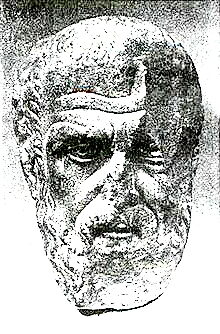
Epiktētou diatribai
Epiktētou diatribai is a Collection of lectures on Stoic philosophy. It was written by Arrian.
- Written by
- Arrian
- Country of origin
- Ancient Greece
All 4 facts, and where they come from
Facts
4 facts · 0 confirmed by two sources · 2 cited · 2 from one source
Where this comes from
Papalocal keeps its own record. It started from these sources; what each one said is kept here as it was copied, so a change on their side never changes this page by itself. Tap one to read its version.
What Wikidata says · copied November 17, 2026 · revision 2412786110
- Described as
- Collection of lectures on Stoic philosophy
- Other names
- Discourses of Epictetus
- What it is
- literary work
- Written by
- Arrian · 1 reference
- Language
- Ancient Greek · 1 reference
- Country of origin
- Ancient Greece · 1 reference
- Wikipedias with a page
- 12
Wikidata item Q4357914 (wikidata.org/wiki/Q4357914), public domain (CC0). Copied 2026-11-17.
What Wikipedia says · copied November 17, 2026 · revision 1384296364
The Discourses of Epictetus (Greek: Ἐπικτήτου διατριβαί, Epiktētou diatribai) are a series of informal lectures by the Stoic philosopher Epictetus written down by his pupil Arrian around 108 AD. Four books out of an original eight are still extant. The philosophy of Epictetus is intensely practical. He directs his students to focus attention on their opinions, anxieties, passions, and desires, so that "they may never fail to get what they desire, nor fall into what they avoid."
The Discourses have been influential since they were written. They are referred to and quoted by Marcus Aurelius. Since the 16th century, they have been translated into multiple languages and reprinted many times.
From the Wikipedia article “Discourses of Epictetus” (en.wikipedia.org/wiki/Discourses_of_Epictetus), by its contributors, under CC BY-SA 4.0 (creativecommons.org/licenses/by-sa/4.0/). Copied 2026-11-17; not changed.
Confirmed Two sources agree. Cited One source, and it names where it got it. One source One source, without a reference of its own. Sources disagree The sources disagree. We show the best-supported value and keep theirs below.
Picture: Wikimedia Commons: Codex Bodleianus (Cod graec Misc 251 Auct T 4 13) Kopie.jpg · See Commons file page