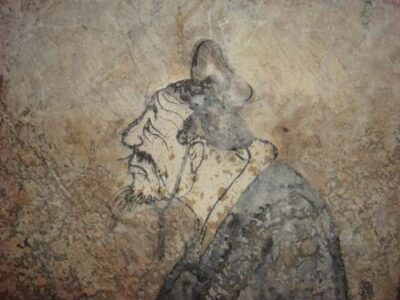
Analects
Analects is an ancient Confucian text collecting sayings and reminescences about Confucius.
- Came out
- 5th century BC
- Written by
- anonymous
- Country of origin
- China
All 5 facts, and where they come from
Facts
5 facts · 0 confirmed by two sources · 0 cited · 5 from one source
Where this comes from
Papalocal keeps its own record. It started from these sources; what each one said is kept here as it was copied, so a change on their side never changes this page by itself. Tap one to read its version.
What Wikidata says · copied November 17, 2026 · revision 2517627984
- Described as
- ancient Confucian text collecting sayings and reminescences about Confucius
- Other names
- Analects of Confucius, Confucian Analects, The Analects, Lunyu, Lun-yu, Lun-yü, The Analects of Confucius, Lúnyǔ
- What it is
- literary work
- Written by
- anonymous
- Language
- Classical Chinese
- Country of origin
- China
- Came out
- 5th century BC
- Wikipedias with a page
- 66
Wikidata item Q276015 (wikidata.org/wiki/Q276015), public domain (CC0). Copied 2026-11-17.
What Wikipedia says · copied November 17, 2026 · revision 1384225463
The Analects, also known as the Sayings of Confucius, is an ancient Chinese philosophical text composed of sayings and ideas attributed to Confucius and his contemporaries, traditionally believed to have been compiled by his followers.
The consensus among scholars is that large portions of the text were composed during the Warring States period (475–221 BCE), and that the work achieved its final form during the mid-Han dynasty (206 BCE – 220 CE). During the early Han, the Analects was merely considered to be a commentary on the Five Classics. However, by the dynasty's end the status of the Analects had grown to become a central text of Confucianism.
During the late Song dynasty (960–1279 CE) the importance of the Analects as a Chinese philosophy work was raised above that of the older Five Classics, and it was recognized as one of the "Four Books". The Analects has been one of the most widely read and studied books in China for more than two millennia; its ideas continue to have a substantial influence on East Asian thought and values.
Confucius believed that the welfare of a country depended on the moral cultivation of its people, beginning from the nation's leadership. He believed that individuals could begin to cultivate an all-encompassing sense of virtue through ren, and that the most basic step to cultivating ren was filial piety—primarily the devotion to one's parents and older siblings.
He taught that one's individual desires do not need to be suppressed, but that people should be educated to reconcile their desires via li, rituals and forms of propriety, through which people could demonstrate their respect for others and their responsible roles in society. Confucius also believed that a ruler's sense of de, or 'virtue', was his primary prerequisite for leadership.
Confucius' primary goal in educating his students was to produce ethically well-cultivated men who would carry themselves with gravity, speak correctly, and demonstrate consummate integrity in all things.
From the Wikipedia article “Analects” (en.wikipedia.org/wiki/Analects), by its contributors, under CC BY-SA 4.0 (creativecommons.org/licenses/by-sa/4.0/). Copied 2026-11-17; not changed.
Confirmed Two sources agree. Cited One source, and it names where it got it. One source One source, without a reference of its own. Sources disagree The sources disagree. We show the best-supported value and keep theirs below.
Picture: Wikimedia Commons: Rongo Analects 02.jpg · See Commons file page