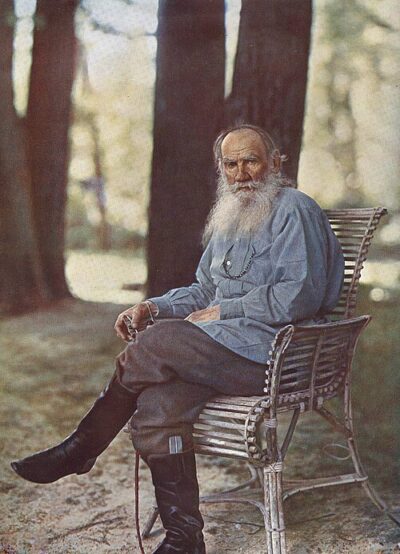
Anna Karenina
Anna Karenina is a 1877 novel by Leo Tolstoy.
- Published
- 1877
- Came out
- 1873
- Written by
- Leo Tolstoy
- Genre
- realist novel
- Country of origin
- Russian Empire
All 9 facts, and where they come from
Facts
9 facts · 0 confirmed by two sources · 0 cited · 9 from one source
Where this comes from
Papalocal keeps its own record. It started from these sources; what each one said is kept here as it was copied, so a change on their side never changes this page by itself. Tap one to read its version.
What Wikidata says · copied November 17, 2026 · revision 2563323567
- Described as
- 1877 novel by Leo Tolstoy
- What it is
- literary work
- Written by
- Leo Tolstoy
- Genre
- realist novel
- Published
- 1877
- Language
- Russian
- Country of origin
- Russian Empire
- Comes after
- War and Peace · 1 reference
- Followed by
- Resurrection · 1 reference
- Came out
- 1873
- Wikipedias with a page
- 109
Wikidata item Q147787 (wikidata.org/wiki/Q147787), public domain (CC0). Copied 2026-11-17.
What Wikipedia says · copied November 17, 2026 · revision 1386069316
Anna Karenina (Russian: Анна Каренина, IPA: [ˈanːə kɐˈrʲenʲɪnə]) is a novel, first published in book form in 1878, by the Russian author Leo Tolstoy. Often considered to be the greatest work of world literature, Tolstoy himself called it his first true novel. It was initially released in serial installments from 1875 to 1877, all but the last part appearing in the periodical The Russian Messenger. By the time he was finishing up the last installments, Tolstoy was in an anguished state of mind having come to hate it but finished it unwillingly.
The novel deals with themes of betrayal, faith, family, marriage, Imperial Russian society, desire, and the differences between rural and urban life. The story centres on an extramarital affair between Anna and cavalry officer Count Alexei Kirillovich Vronsky that scandalises the social circles of Saint Petersburg and forces the young lovers to flee to Italy in pursuit of happiness, but after they return to Russia, their lives further unravel.
Trains are a motif throughout the novel, with several major plot points taking place either on passenger trains or at stations in Saint Petersburg and elsewhere in Russia. The story takes place against the backdrop of the liberal reforms initiated by Emperor Alexander II of Russia and the rapid societal transformations that followed. The novel has been adapted into various media including theatre, opera, film, television, ballet, figure skating, and radio drama.
From the Wikipedia article “Anna Karenina” (en.wikipedia.org/wiki/Anna_Karenina), by its contributors, under CC BY-SA 4.0 (creativecommons.org/licenses/by-sa/4.0/). Copied 2026-11-17; not changed.
Confirmed Two sources agree. Cited One source, and it names where it got it. One source One source, without a reference of its own. Sources disagree The sources disagree. We show the best-supported value and keep theirs below.
Picture: Wikimedia Commons: AnnaKareninaTitle.jpg · See Commons file page