
Annie Jump Cannon Award in Astronomy
Annie Jump Cannon Award in Astronomy is an American award for women astronomers. It was created in 1934. It is given by the American Astronomical Society.
- Country
- United States
- Created
- 1934
All 9 facts, and where they come from
Facts
9 facts · 0 confirmed by two sources · 0 cited · 9 from one source
Where this comes from
Papalocal keeps its own record. It started from these sources; what each one said is kept here as it was copied, so a change on their side never changes this page by itself. Tap one to read its version.
What Wikidata says · copied November 16, 2026 · revision 2451362547
- Described as
- American award for women astronomers
- What it is
- science award; astronomy prize; early career award
- Created
- 1934
- Country
- United States
- Given by
- American Association of University Women (1973–2004); American Astronomical Society (2 times) (1934–)
- Named after
- Annie Jump Cannon
- Official website
- https://aas.org/grants-and-prizes/annie-jump-cannon-award-astronomy
- Wikipedias with a page
- 18
Wikidata item Q566886 (wikidata.org/wiki/Q566886), public domain (CC0). Copied 2026-11-16.
What Wikipedia says · copied November 16, 2026 · revision 1369892765
The Annie Jump Cannon Award in Astronomy is awarded annually by the American Astronomical Society (AAS) to a woman resident of North America, who is within five years of receipt of a PhD, for distinguished contributions to astronomy or for similar contributions in related sciences which have immediate application to astronomy. The awardee is invited to give a talk at an AAS meeting and is given a $1,500 honorarium. The award is named in honor of American astronomer Annie Jump Cannon.
Margaret Burbidge was due to be given the 1972 award, but she refused it on the grounds of gender discrimination, stating: "It is high time that discrimination in favor of, as well as against, women in professional life be removed". This prompted the AAS to set up its first committee on the status of women in astronomy and they ceased issuing the award directly. From 1973 to 2004 the American Association of University Women issued the awards, on advice from the AAS. The AAS resumed direct issuing of the award in 2005.
From the Wikipedia article “Annie Jump Cannon Award in Astronomy” (en.wikipedia.org/wiki/Annie_Jump_Cannon_Award_in_Astronomy), by its contributors, under CC BY-SA 4.0 (creativecommons.org/licenses/by-sa/4.0/). Copied 2026-11-16; not changed.
Confirmed Two sources agree. Cited One source, and it names where it got it. One source One source, without a reference of its own. Sources disagree The sources disagree. We show the best-supported value and keep theirs below.
People connected 12
Won it
 Vasiliki Kalogera (2002)Greek astrophysicist
 Victoria Kaspi (1998)Canadian astrophysicist
 Andrea M. Ghez (1994)American astronomer
 Jane Luu (1991)Vietnamese American astronomer
- BBeatrice Tinsley (1974)New Zealand astronomer (1941–1981)
- EErika Böhm-Vitense (1965)German-American astronomer
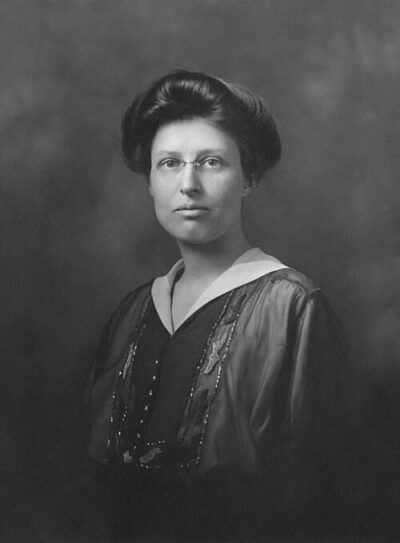 Margaret Harwood (1962)American astronomer
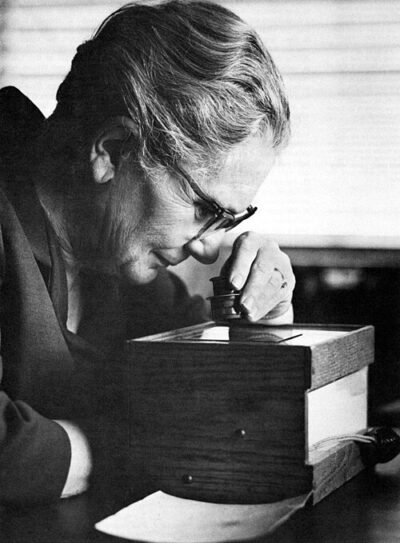 Helen Sawyer Hogg (1949)astronomer (1905-1993)
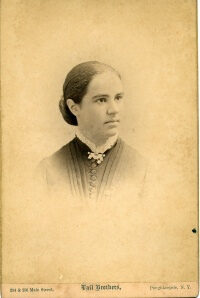 Antonia Maury (1943)American astronomer (1866–1952)
- JJulie Vinter Hansen (1940)Danish astronomer (1890-1960)
 Charlotte Moore Sitterly (1937)American astronomer (1898-1990)
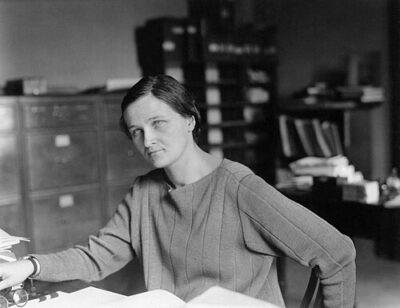 Cecilia Helena Payne Gaposchkin (1934)British-born American astronomer
