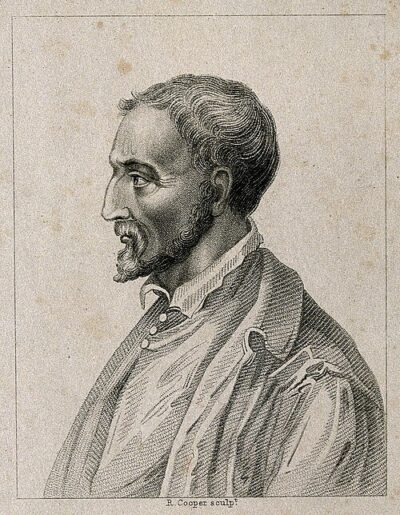
Ars Magna
Ars Magna is a written work. It came out in 1545. It was written by Gerolamo Cardano.
- Published
- 1545
- Written by
- Gerolamo Cardano
- Country of origin
- Italy
All 5 facts, and where they come from
Facts
5 facts · 0 confirmed by two sources · 0 cited · 5 from one source
Where this comes from
Papalocal keeps its own record. It started from these sources; what each one said is kept here as it was copied, so a change on their side never changes this page by itself. Tap one to read its version.
What Wikidata says · copied November 17, 2026 · revision 2549039815
- Described as
- book
- Other names
- Artis magnae, sive de regulis algebraicis
- What it is
- written work
- Written by
- Gerolamo Cardano
- Published
- 1545
- Language
- Latin
- Country of origin
- Italy
- Wikipedias with a page
- 15
Wikidata item Q1231083 (wikidata.org/wiki/Q1231083), public domain (CC0). Copied 2026-11-17.
What Wikipedia says · copied November 17, 2026 · revision 1384745599
The Ars Magna (The Great Art, 1545) is an important Latin-language book on algebra written by Gerolamo Cardano. It was first published in 1545 under the title Artis Magnae, Sive de Regulis Algebraicis, Lib. unus (The Great Art, or The Rules of Algebra, Book one). There was a second edition in Cardano's lifetime, published in 1570. It is considered one of the three greatest scientific treatises of the early Renaissance, together with Copernicus' De revolutionibus orbium coelestium and Vesalius' De humani corporis fabrica. The first editions of these three books were published within a two-year span (1543–1545).
From the Wikipedia article “Ars Magna (Cardano book)” (en.wikipedia.org/wiki/Ars_Magna_(Cardano_book)), by its contributors, under CC BY-SA 4.0 (creativecommons.org/licenses/by-sa/4.0/). Copied 2026-11-17; not changed.
Confirmed Two sources agree. Cited One source, and it names where it got it. One source One source, without a reference of its own. Sources disagree The sources disagree. We show the best-supported value and keep theirs below.
Picture: Wikimedia Commons: ArsMagna.jpg · See Commons file page