Associated Press College Basketball Coach of the Year
Associated Press College Basketball Coach of the Year is a Honor awarded to collegiate basketball coaches. It was created in 1995.
- Created
- 1995
All 3 facts, and where they come from
Facts
3 facts · 0 confirmed by two sources · 0 cited · 3 from one source
Where this comes from
Papalocal keeps its own record. It started from these sources; what each one said is kept here as it was copied, so a change on their side never changes this page by itself. Tap one to read its version.
What Wikidata says · copied November 17, 2026 · revision 2517809537
- Described as
- Honor awarded to collegiate basketball coaches
- What it is
- basketball award
- Created
- 1995
- Sport
- basketball
- Wikipedias with a page
- 3
Wikidata item Q3625675 (wikidata.org/wiki/Q3625675), public domain (CC0). Copied 2026-11-17.
What Wikipedia says · copied November 17, 2026 · revision 1385903764
The AP College Basketball Coach of the Year award was established in 1967 to recognize the best men's college basketball coach of the year, as voted upon by the Associated Press (AP). A parallel award for women's coaches was added in 1995. The 2011 women's award, shared by three coaches, was notable as the first shared AP award in any college sport. The men's award saw its first tie in 2025.
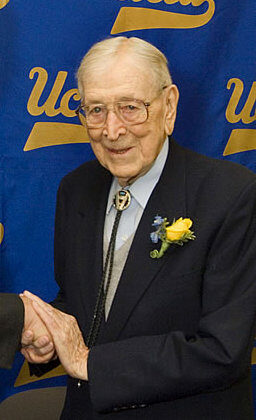
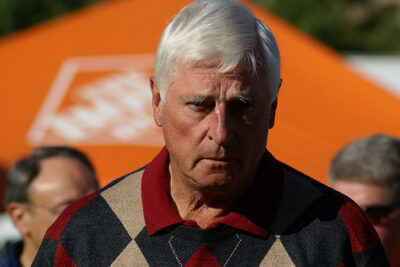
John Wooden of UCLA and Bob Knight of Indiana have won the most awards on the men's side with five and three, respectively. As of 2026, two active men's coaches have won the award twice each: Bill Self at Kansas, and Kelvin Sampson, first at Oklahoma and then at Houston. Geno Auriemma of UConn has by far the most awards, with nine on the women's side, followed by Muffet McGraw of Notre Dame with four. Tom and Keno Davis are the only father-and-son duo to win the award.
From the Wikipedia article “AP College Basketball Coach of the Year” (en.wikipedia.org/wiki/AP_College_Basketball_Coach_of_the_Year), by its contributors, under CC BY-SA 4.0 (creativecommons.org/licenses/by-sa/4.0/). Copied 2026-11-17; not changed.
Confirmed Two sources agree. Cited One source, and it names where it got it. One source One source, without a reference of its own. Sources disagree The sources disagree. We show the best-supported value and keep theirs below.