

astrobiology
Astrobiology is a study of the formation of life on Earth and elsewhere on other planets in outer space.
All 3 facts, and where they come from
Facts
3 facts · 0 confirmed by two sources · 0 cited · 3 from one source
Where this comes from
Papalocal keeps its own record. It started from these sources; what each one said is kept here as it was copied, so a change on their side never changes this page by itself. Tap one to read its version.
What Wikidata says · copied November 17, 2026 · revision 2567710743
- Described as
- study of the formation of life on Earth and elsewhere on other planets in outer space
- Other names
- exobiology, xenobiology, Astrobiology, biology in outer space, space biology, astronomy and biology, astronomical biology, biological astronomy
- What it is
- branch of biology; branch of astronomy; academic discipline
- Wikipedias with a page
- 95
Wikidata item Q411 (wikidata.org/wiki/Q411), public domain (CC0). Copied 2026-11-17.
What Wikipedia says · copied November 17, 2026 · revision 1386041168
Astrobiology is an interdisciplinary field of scientific study that aims to answer fundamental questions about the origin, distribution and evolution of life in the universe. Its scope includes the origin and evolution of life on Earth, the search for extraterrestrial life, and the future prospects for life in the universe. Astrobiology is founded on the premise that life may exist beyond Earth, and posits that studying how life arose and developed on Earth may inform our search for life elsewhere. Astrobiology is closely related to (but distinct from) exobiology: by definition, exobiology is focused on the study of life beyond Earth, including human spaceflight and the prospects for human exploration of other planets.
Research in astrobiology builds on interdisciplinary collaborations between experts in disciplines such as astronomy, astrochemistry, the Earth sciences, and the life and environmental sciences. The scope of the research includes the exploration of potentially habitable environments in our Solar System, the discovery and characterization of potentially habitable exoplanets, elucidating conditions on the early Earth that may have given rise to life, the origin and evolution of terrestrial life, and the identification of biosignatures that may enable us to detect life elsewhere.
From the Wikipedia article “Astrobiology” (en.wikipedia.org/wiki/Astrobiology), by its contributors, under CC BY-SA 4.0 (creativecommons.org/licenses/by-sa/4.0/). Copied 2026-11-17; not changed.
Confirmed Two sources agree. Cited One source, and it names where it got it. One source One source, without a reference of its own. Sources disagree The sources disagree. We show the best-supported value and keep theirs below.
Picture: Wikimedia Commons: Blacksmoker in Atlantic Ocean.jpg · See Commons file page
People connected 4
Field
 Carl SaganAmerican astrophysicist, cosmologist and author (1934–1996)
 Paul DaviesBritish physicist (1946-)
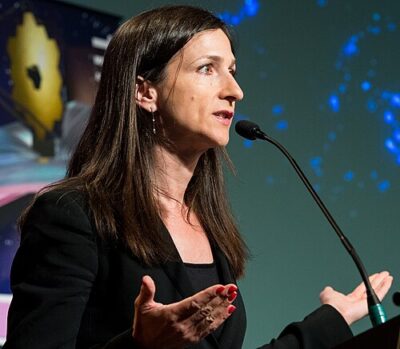 Sara SeagerCanadian astronomer and planetary scientist
- MMichael H. HartAmerican astronomer
