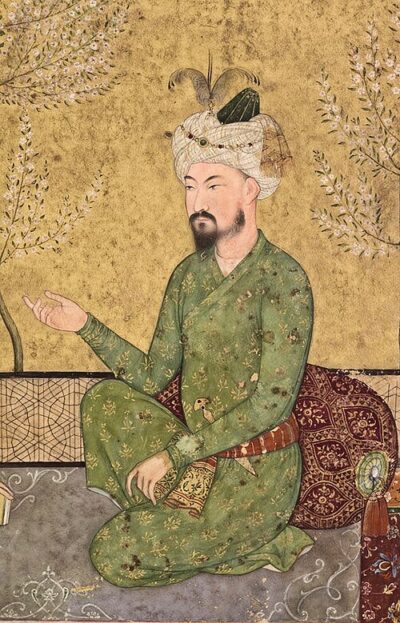
Baburnama
Baburnama is a name given to the memoirs of Ẓahīr ud-Dīn Muḥammad Bābur.
- Published
- 16th century
- Written by
- Babur
- Genre
- autobiography
- Country of origin
- Mughal Empire
All 7 facts, and where they come from
Facts
7 facts · 0 confirmed by two sources · 0 cited · 7 from one source
Where this comes from
Papalocal keeps its own record. It started from these sources; what each one said is kept here as it was copied, so a change on their side never changes this page by itself. Tap one to read its version.
What Wikidata says · copied November 17, 2026 · revision 2568670917
- Described as
- name given to the memoirs of Ẓahīr ud-Dīn Muḥammad Bābur
- Other names
- History of Babur, Letters of Babur, Tuzk-e Babri, Waqīʿat-i Bāburī, Tuzak-i Babari, Memoirs of Bābur, Memoirs of Zehir ed-Din Muhammed Baber
- What it is
- written work
- Written by
- Babur
- Genre
- autobiography
- Published
- 16th century
- Language
- Chagatai; Persian
- Country of origin
- Mughal Empire
- Wikipedias with a page
- 35
Wikidata item Q1906014 (wikidata.org/wiki/Q1906014), public domain (CC0). Copied 2026-11-17.
What Wikipedia says · copied November 17, 2026 · revision 1381211394
The Bāburnāma or Tuzuk-i-Baburi (Chagatay: وقائع, romanized: Wäqāʾiʿ, lit. 'The Events'; Persian: بابرنامه, تزک بابری, romanized: Bāburnāma, Tūzak-i Bāburī, lit. 'Book of Babur') or is the memoirs of Ẓahīr-ud-Dīn Muhammad Bābur (1483–1530), founder of the Mughal Empire and a great-great-great-grandson of Timur. It is written in the Chagatai language, known to Babur as Türki "Turkic", the spoken language of the Timurids.
During the reign of his grandson, the emperor Akbar, the work was translated into Classical Persian, the literary language of the Mughal court, by a courtier, Abdul Rahim Khan-i-Khanan, in 1589–90 CE (AH 998).
From the Wikipedia article “Baburnama” (en.wikipedia.org/wiki/Baburnama), by its contributors, under CC BY-SA 4.0 (creativecommons.org/licenses/by-sa/4.0/). Copied 2026-11-17; not changed.
Confirmed Two sources agree. Cited One source, and it names where it got it. One source One source, without a reference of its own. Sources disagree The sources disagree. We show the best-supported value and keep theirs below.
Picture: Wikimedia Commons: Babur in the first illustrated Baburnama, painted in 1589-1590.jpg · See Commons file page