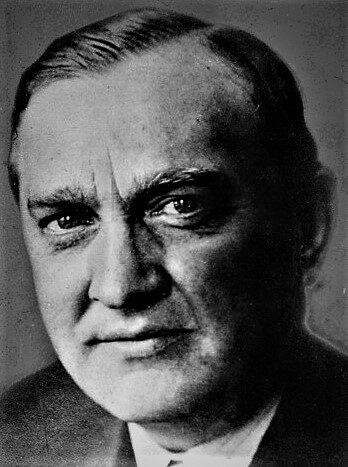
Banach fixed-point theorem
Banach fixed-point theorem is a theorem about metric spaces.
All 4 facts, and where they come from
Facts
4 facts · 0 confirmed by two sources · 0 cited · 4 from one source
Where this comes from
Papalocal keeps its own record. It started from these sources; what each one said is kept here as it was copied, so a change on their side never changes this page by itself. Tap one to read its version.
What Wikidata says · copied November 17, 2026 · revision 2546705997
- Described as
- theorem about metric spaces
- Other names
- Banach–Caccioppoli fixed-point theorem, contraction mapping theorem, contractive mapping theorem, BFPT
- What it is
- fixed-point theorem; theorem
- Named after
- Stefan Banach; Renato Caccioppoli
- Wikipedias with a page
- 28
Wikidata item Q220680 (wikidata.org/wiki/Q220680), public domain (CC0). Copied 2026-11-17.
What Wikipedia says · copied November 17, 2026 · revision 1357724986
In mathematics, the Banach fixed-point theorem (also known as the contraction mapping theorem or contractive mapping theorem or Banach–Caccioppoli theorem) is an important tool in the theory of metric spaces; it guarantees the existence and uniqueness of fixed points of certain self-maps of metric spaces and provides a constructive method to find those fixed points. It can be understood as an abstract formulation of Picard's method of successive approximations. The theorem is named after Stefan Banach (1892–1945) who first stated it in 1922.
From the Wikipedia article “Banach fixed-point theorem” (en.wikipedia.org/wiki/Banach_fixed-point_theorem), by its contributors, under CC BY-SA 4.0 (creativecommons.org/licenses/by-sa/4.0/). Copied 2026-11-17; not changed.
Confirmed Two sources agree. Cited One source, and it names where it got it. One source One source, without a reference of its own. Sources disagree The sources disagree. We show the best-supported value and keep theirs below.