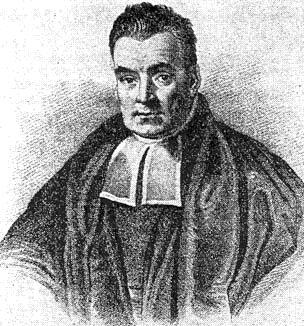
Bayes' theorem
Bayes' theorem is a theorem describing the probability of an event based on prior knowledge of conditions that might be related to the event.
All 2 facts, and where they come from
Facts
2 facts · 0 confirmed by two sources · 0 cited · 2 from one source
Where this comes from
Papalocal keeps its own record. It started from these sources; what each one said is kept here as it was copied, so a change on their side never changes this page by itself. Tap one to read its version.
What Wikidata says · copied November 17, 2026 · revision 2564345863
- Described as
- theorem describing the probability of an event based on prior knowledge of conditions that might be related to the event
- Other names
- Bayes' rule, Bayes–Price theorem, Bayesian law, Bayes' law, Bayes theorem
- What it is
- theorem
- Named after
- Thomas Bayes
- Wikipedias with a page
- 66
Wikidata item Q182505 (wikidata.org/wiki/Q182505), public domain (CC0). Copied 2026-11-17.
What Wikipedia says · copied November 17, 2026 · revision 1381079899
In probability theory, Bayes' theorem (alternatively Bayes' law or Bayes' rule), named after Thomas Bayes (), gives a mathematical rule for inverting conditional probabilities, allowing the probability of a cause to be found given its effect. For example, with Bayes' theorem, the probability that a patient has a disease given that they tested positive for that disease can be found using the probability that the test yields a positive result when the disease is present. The theorem was developed in the 18th century by Bayes and independently by Pierre-Simon Laplace.
One of Bayes' theorem's many applications is Bayesian inference, an approach to statistical inference, where it is used to invert the probability of observations given a model configuration (i.e., the likelihood function) to obtain the probability of the model configuration given the observations (i.e., the posterior probability).
From the Wikipedia article “Bayes' theorem” (en.wikipedia.org/wiki/Bayes'_theorem), by its contributors, under CC BY-SA 4.0 (creativecommons.org/licenses/by-sa/4.0/). Copied 2026-11-17; not changed.
Confirmed Two sources agree. Cited One source, and it names where it got it. One source One source, without a reference of its own. Sources disagree The sources disagree. We show the best-supported value and keep theirs below.