
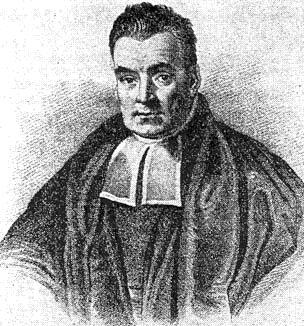
Thomas Bayes
Thomas Bayes was a British mathematician and Presbyterian minister. Born 1702, in London. Died April 17, 1761, in Royal Tunbridge Wells. Positions held include Christian minister (1733–1752). Known for An Essay towards solving a Problem in the Doctrine of Chances and Bayes' theorem. Educated at University of Edinburgh. Awards include Fellow of the Royal Society.
Facts
20 facts · 0 confirmed by two sources · 9 cited · 9 from one source · 2 where the sources disagree
What’s different
- Born: we show 1702 (Sources disagree). Wikipedia says c. 1701
- Died: we show April 17, 1761 (Sources disagree). Wikipedia says April 7, 1761
Where this comes from
Papalocal keeps its own record. It started from these sources; what each one said is kept here as it was copied, so a change on their side never changes this page by itself. Tap one to read its version.
What Wikidata says · copied November 16, 2026 · revision 2567477965
- Described as
- British mathematician and Presbyterian minister (1702-1761)
- Born
- 1702 · 3 references
- Died
- April 17, 1761 · 2 references
- Born in
- London · 1 reference
- Died in
- Royal Tunbridge Wells
- Buried in
- Bunhill Fields · 1 reference
- Citizen of
- Kingdom of Great Britain
- Occupation
- mathematician · 1 reference; statistician · 1 reference; cleric · 1 reference; philosopher · 1 reference
- Positions held
- Christian minister (1733–1752) · 1 reference
- Education
- University of Edinburgh (1719–) · 1 reference
- Member of
- Royal Society of London (1742–)
- Known for
- An Essay towards solving a Problem in the Doctrine of Chances; Bayes' theorem
- Awards
- Fellow of the Royal Society (1742) · 1 reference
- Field
- probability theory; mathematics · 1 reference
- Father
- Joshua Bayes · 1 reference
- Religion
- Presbyterianism
- Wikipedias with a page
- 53
Wikidata item Q208452 (wikidata.org/wiki/Q208452), public domain (CC0). Copied November 16, 2026.
What Wikipedia says · copied November 16, 2026 · revision 1385348956
Thomas Bayes ( BAYZ; c. 1701 – 7 April 1761) was an English statistician, philosopher and Presbyterian minister who is known for formulating a specific case of the theorem that bears his name: Bayes' theorem.
Bayes never published what would become his most famous accomplishment; his notes were edited and published posthumously by Richard Price.
- Born, in its opening lines
- c. 1701
- Died, in its opening lines
- April 7, 1761
From the Wikipedia article “Thomas Bayes” (en.wikipedia.org/wiki/Thomas_Bayes), by its contributors, under CC BY-SA 4.0 (creativecommons.org/licenses/by-sa/4.0/). Copied November 16, 2026; not changed.
Confirmed Two sources agree. Cited One source, and it names where it got it. One source One source, without a reference of its own. Sources disagree The sources disagree. We show the best-supported value and keep theirs below.
