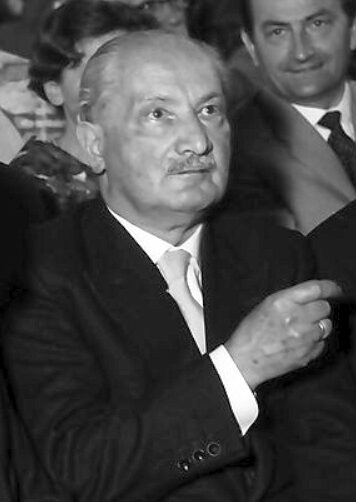
Being and Time
Being and Time is a Philosophy book by Martin Heidegger. It came out in 1927.
- Released
- 1927
- Written by
- Martin Heidegger
- Genre
- non-fiction literature
- Country of origin
- Germany
All 7 facts, and where they come from
Facts
7 facts · 0 confirmed by two sources · 0 cited · 7 from one source
Where this comes from
Papalocal keeps its own record. It started from these sources; what each one said is kept here as it was copied, so a change on their side never changes this page by itself. Tap one to read its version.
What Wikidata says · copied November 17, 2026 · revision 2560424493
- Described as
- Philosophy book by Martin Heidegger
- What it is
- philosophical work
- Written by
- Martin Heidegger
- Genre
- non-fiction literature
- Released
- 1927
- Language
- German
- Country of origin
- Germany · 1 reference
- Followed by
- Kant and the Problem of Metaphysics · 1 reference
- Wikipedias with a page
- 44
Wikidata item Q404567 (wikidata.org/wiki/Q404567), public domain (CC0). Copied 2026-11-17.
What Wikipedia says · copied November 17, 2026 · revision 1384799736
Being and Time (German: Sein und Zeit) is the 1927 magnum opus of German philosopher Martin Heidegger and a key document of existentialism. Being and Time had a notable impact on subsequent philosophy, literary theory and many other fields. Though controversial, its stature in intellectual history has been compared with works by Immanuel Kant and G. W. F. Hegel. The book attempts to revive ontology through an analysis of Dasein, or "being-in-the-world." It is also noted for an array of neologisms and complex language, as well as an extended treatment of "authenticity" as a means to grasp and confront the unique and finite possibilities of the individual.
From the Wikipedia article “Being and Time” (en.wikipedia.org/wiki/Being_and_Time), by its contributors, under CC BY-SA 4.0 (creativecommons.org/licenses/by-sa/4.0/). Copied 2026-11-17; not changed.
Confirmed Two sources agree. Cited One source, and it names where it got it. One source One source, without a reference of its own. Sources disagree The sources disagree. We show the best-supported value and keep theirs below.
Picture: unknown, via Wikimedia Commons · Public domain