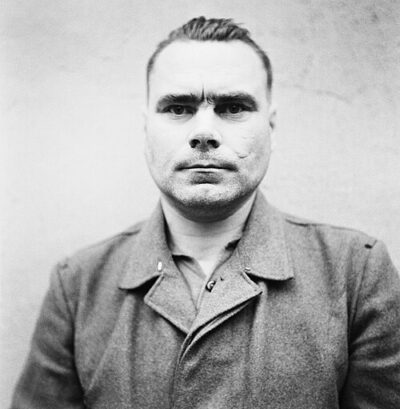
Bergen-Belsen concentration camp
Bergen-Belsen concentration camp is a Nazi concentration camp.
- Country
- Germany
All 6 facts, and where they come from
Facts
6 facts · 0 confirmed by two sources · 2 cited · 4 from one source
Where this comes from
Papalocal keeps its own record. It started from these sources; what each one said is kept here as it was copied, so a change on their side never changes this page by itself. Tap one to read its version.
What Wikidata says · copied November 17, 2026 · revision 2537645576
- Described as
- Nazi concentration camp
- Other names
- KZ Bergen-Belsen, Belsen, Bergen-Belsen
- What it is
- Nazi concentration camp · 1 reference; concentration camp · 1 reference
- Located in
- Celle district
- Country
- Germany
- Part of
- Schutzstaffel · 1 reference
- Official website
- https://bergen-belsen.stiftung-ng.de/en/ · 1 reference
- Wikipedias with a page
- 52
Wikidata item Q7332 (wikidata.org/wiki/Q7332), public domain (CC0). Copied 2026-11-17.
What Wikipedia says · copied November 17, 2026 · revision 1386175503
Bergen-Belsen (pronounced [ˈbɛʁɡn̩ˌbɛlsn̩]), or Belsen, was a Nazi concentration camp in what is today Lower Saxony in northern Germany, southwest of the town of Bergen near Celle. Originally established as a prisoner of war camp, in 1943, parts of it became a concentration camp. Initially this was an "exchange camp", where Jewish hostages were held with the intention of exchanging them for German prisoners of war held overseas. The camp was later expanded to hold Jews from other concentration camps, as a part of the Holocaust.
After 1945, the name was applied to the displaced persons camp established nearby, but it is most commonly associated with the concentration camp. From 1941 to 1945, almost 20,000 Soviet prisoners of war and a further 50,000 inmates died there. Overcrowding, lack of food, and poor sanitary conditions caused outbreaks of typhus, tuberculosis, typhoid fever, and dysentery, leading to the deaths of more than 35,000 people in the first few months of 1945, shortly before and after the liberation.
The camp was liberated on April 15, 1945, by the British 11th Armoured Division. The soldiers discovered approximately 60,000 prisoners inside, most of them half-starved and seriously ill, and another 13,000 corpses lying around the camp unburied. A memorial with an exhibition hall currently stands at the site.
From the Wikipedia article “Bergen-Belsen concentration camp” (en.wikipedia.org/wiki/Bergen-Belsen_concentration_camp), by its contributors, under CC BY-SA 4.0 (creativecommons.org/licenses/by-sa/4.0/). Copied 2026-11-17; not changed.
Confirmed Two sources agree. Cited One source, and it names where it got it. One source One source, without a reference of its own. Sources disagree The sources disagree. We show the best-supported value and keep theirs below.
Picture: Wikimedia Commons: Bergen Belsen Liberation 03.jpg · See Commons file page