

Schutzstaffel
Schutzstaffel is a Nazi paramilitary organization (1925–45) with the Waffen-SS as a military branch; conducted the mass murder of the European Jews (holocaust). Its headquarters are in Berlin. It stands for Nazism.
- Founded
- April 4, 1925
- Headquarters
- Berlin
- Country
- Weimar Republic
All 14 facts, and where they come from
Facts
14 facts · 0 confirmed by two sources · 1 cited · 12 from one source · 1 where the sources disagree
What’s different
- Ended: we show May 8, 1945 (Sources disagree). Wikidata also lists October 10, 1945
Where this comes from
Papalocal keeps its own record. It started from these sources; what each one said is kept here as it was copied, so a change on their side never changes this page by itself. Tap one to read its version.
What Wikidata says · copied November 16, 2026 · revision 2565407198
- Described as
- Nazi paramilitary organization (1925–45) with the Waffen-SS as a military branch; conducted the mass murder of the European Jews (holocaust)
- Other names
- Elite Guard, Protection Echelon
- What it is
- paramilitary organization · 1 reference; squadron; military organization
- Founded
- April 4, 1925
- Ended
- May 8, 1945; October 10, 1945
- Headquarters
- Berlin
- Country
- Weimar Republic; Nazi Germany
- Chair
- Reichsführer-SS
- Part of
- Nazi Party
- Field
- political repression; genocide; war
- Ideology
- Nazism
- Wikipedias with a page
- 97
Wikidata item Q44687 (wikidata.org/wiki/Q44687), public domain (CC0). Copied 2026-11-16.
What Wikipedia says · copied November 16, 2026 · revision 1384450200
The Schutzstaffel (German: [ˈʃʊtsˌʃtafl̩] ; lit. 'Protection Squadron'; SS; also stylised with SS runes as ᛋᛋ) was a major paramilitary organisation under Adolf Hitler and the Nazi Party in Nazi Germany, and later throughout German-occupied Europe during World War II.
It began with a small guard unit known as the Saal-Schutz ("Hall Security") made up of party volunteers to provide security for party meetings in Munich. In 1925, Heinrich Himmler joined the unit, which had by then been reformed and given its final name. Under his direction (1929–1945) it grew from a small paramilitary formation during the Weimar Republic to one of the most powerful organisations in Nazi Germany. From the time of the Nazi Party's rise to power until the regime's collapse in 1945, the SS was the foremost agency of security, mass surveillance, and state terrorism within Germany and German-occupied Europe.
The two main constituent groups were the Allgemeine SS (General SS) and Waffen-SS (Armed SS). The Allgemeine SS was responsible for enforcing the racial policy of Nazi Germany and general policing, whereas the Waffen-SS consisted of the combat units of the SS, with a sworn allegiance to Hitler. A third component of the SS, the SS-Totenkopfverbände (SS-TV; "Death's Head Units"), ran the concentration camps and extermination camps. Additional subdivisions of the SS included the Gestapo and the Sicherheitsdienst (SD) organisations. They were tasked with detecting actual or potential enemies of Nazi Germany, neutralizing the opposition, policing the German people for their commitment to Nazi ideology and providing domestic and foreign intelligence.
The SS was the organisation most responsible for the genocide of an estimated 6 million Jews and millions of other victims during the Holocaust. Members of all of its branches committed war crimes and crimes against humanity during World War II (1939–1945). The SS was also involved in commercial enterprises and exploited concentration camp inmates as slave labour. After Nazi Germany's defeat, the SS and the Nazi Party were judged by the International Military Tribunal at Nuremberg to be criminal organisations. Ernst Kaltenbrunner, the highest-ranking surviving SS main department chief, was found guilty of crimes against humanity at the Nuremberg trials and hanged in 1946.
From the Wikipedia article “Schutzstaffel” (en.wikipedia.org/wiki/Schutzstaffel), by its contributors, under CC BY-SA 4.0 (creativecommons.org/licenses/by-sa/4.0/). Copied 2026-11-16; not changed.
Confirmed Two sources agree. Cited One source, and it names where it got it. One source One source, without a reference of its own. Sources disagree The sources disagree. We show the best-supported value and keep theirs below.
Picture: Wikimedia Commons: Bundesarchiv Bild 183-H04436, Klagenfurt, Adolf Hitler, Ehrenkompanie.jpg · See Commons file page
People connected 15
Members
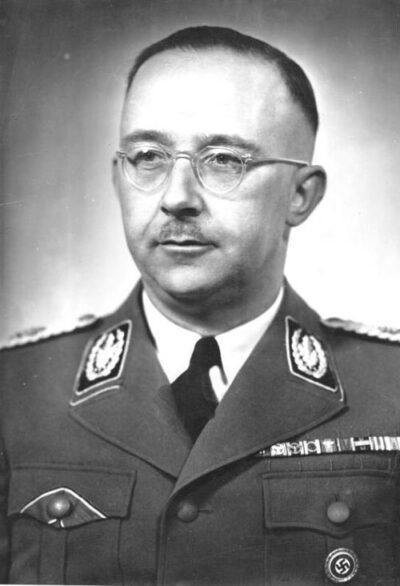 Heinrich Himmler (1925–)German Nazi politician; leader of the German SS & main architect of the Holocaust (1900-1945)
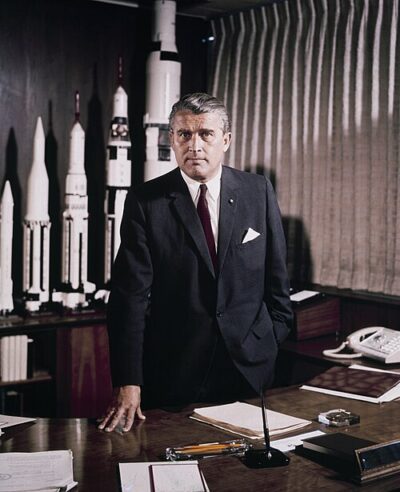 Wernher von Braun (1940–1945)German and later American aerospace engineer and space architect (1912–1977)
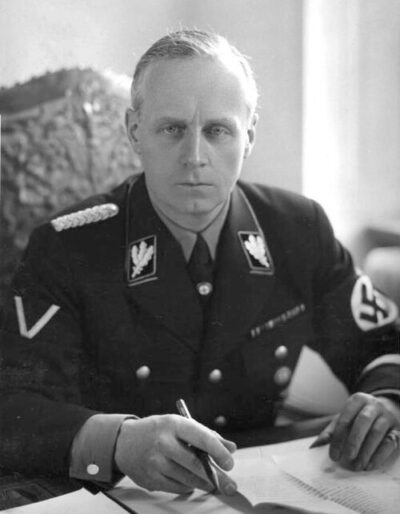 Joachim von RibbentropGerman Foreign Minister of Nazi Germany (1893–1946)
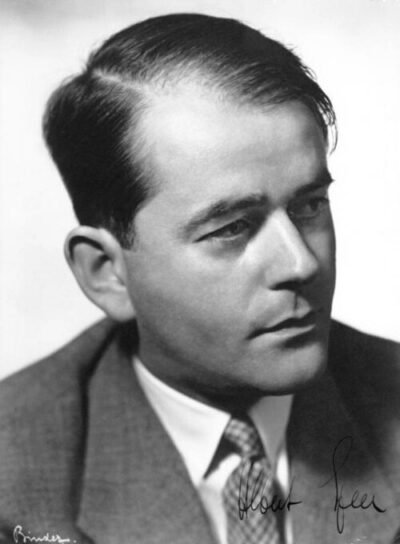 Albert SpeerGerman Nazi architect, Government Minister of Armaments and War Production for Nazi Germany and convicted Nazi War Criminal (1905–1981)
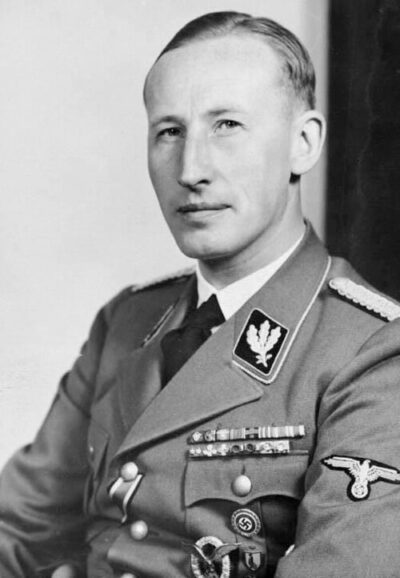 Reinhard HeydrichGerman Nazi SS and Gestapo police official and main architect of the Holocaust Genocide (1904-1942)
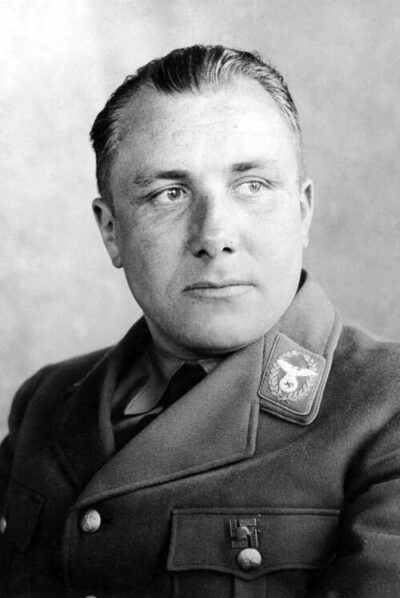 Martin BormannGerman Nazi Party official and head of the Nazi Party Chancellery (1900–1945)
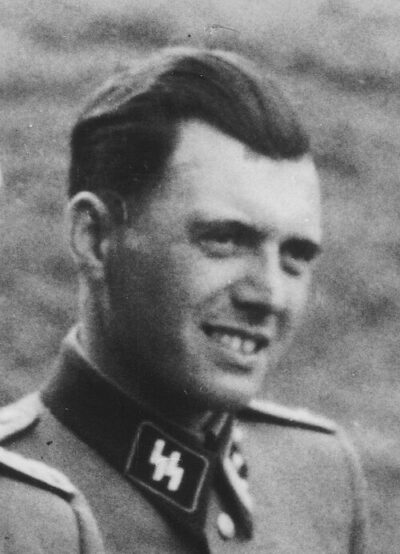 Josef Mengele (1938–)Nazi SS doctor and Military Officer at Auschwitz (1911–1979)
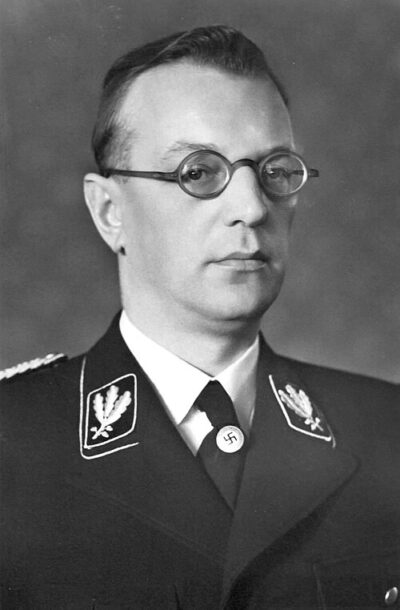 Arthur Seyss-Inquart (1938–1945)Austrian Nazi politician, and Nazi ruler of occupied Netherlands, convicted of crimes against humanity and sentenced to death (1892–1946)
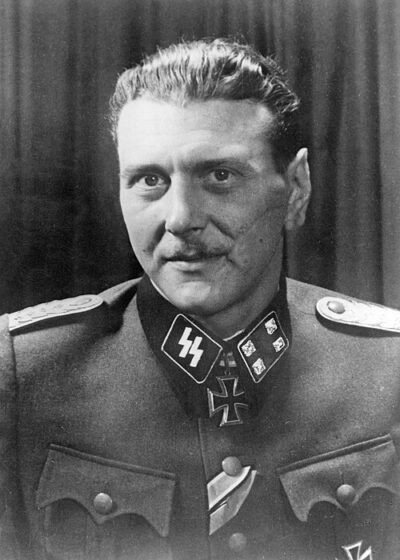 Otto Skorzeny (1934–)Austrian Waffen-SS officer (1908–1975)
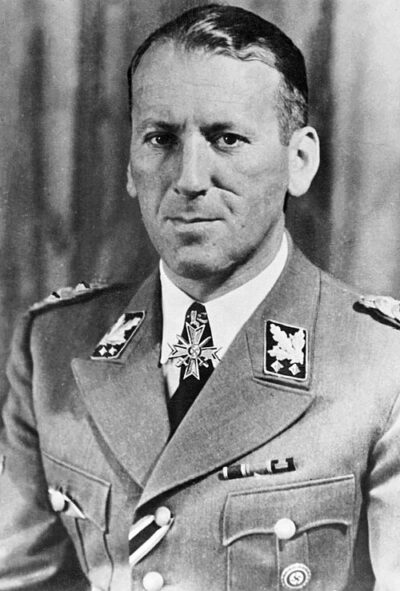 Ernst Kaltenbrunner (1931–)Austrian SS official, a major perpetrator of the Holocaust and convicted war criminal (1903-1946)
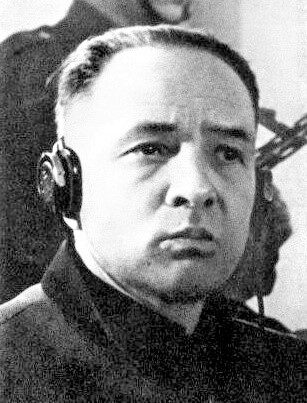 Rudolf Höss (1934–)German war criminal, commandant of Auschwitz (1901–1947)
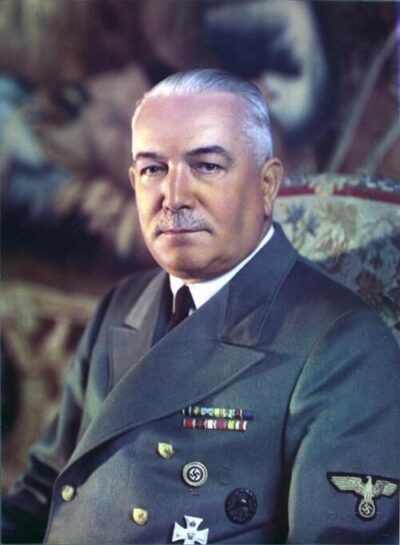 Konstantin von Neurath (1937–)German Foreign Minister, Ambassador and Reich Protector in Bohemia and Moravia, general and Nazi war criminal (1873-1956)
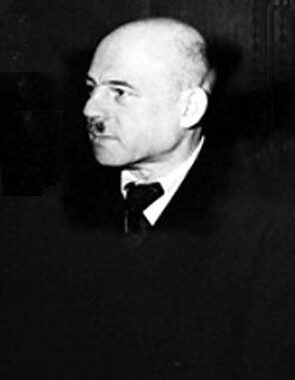 Fritz SauckelGerman Nazi politician and convicted war criminal (1894-1946)
Military branch
- Wernher von Braun (1937–1945)German and later American aerospace engineer and space architect (1912–1977)
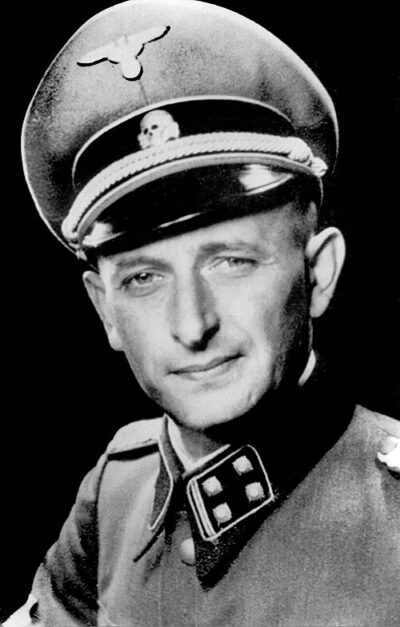 Adolf EichmannGerman-Austrian SS officer and one of the major organizers of the Holocaust (1906–1962)
- Albert SpeerGerman Nazi architect, Government Minister of Armaments and War Production for Nazi Germany and convicted Nazi War Criminal (1905–1981)
- Reinhard HeydrichGerman Nazi SS and Gestapo police official and main architect of the Holocaust Genocide (1904-1942)
- Martin BormannGerman Nazi Party official and head of the Nazi Party Chancellery (1900–1945)
- Josef MengeleNazi SS doctor and Military Officer at Auschwitz (1911–1979)
- Ernst Kaltenbrunner (1940–1945)Austrian SS official, a major perpetrator of the Holocaust and convicted war criminal (1903-1946)
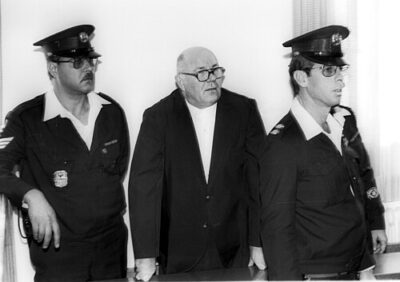 John DemjanjukUkrainian guard at Nazi death camps (1920–2012)
