
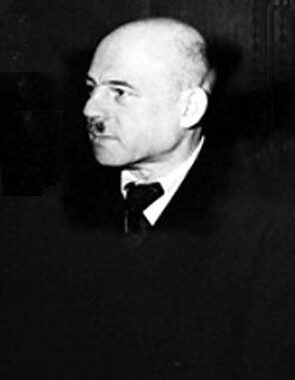
Fritz Sauckel
Fritz Sauckel was a German Nazi politician and convicted war criminal. Born October 27, 1894, in Haßfurt. Died October 16, 1946, in Nuremberg Court Prison. Positions held include General Plenipotentiary for Labour Deployment (1942–1945). Awards include Golden Party Badge and Nazi Party Long Service Award.
Facts
15 facts · 2 confirmed by two sources · 7 cited · 6 from one source
Where this comes from
Papalocal keeps its own record. It started from these sources; what each one said is kept here as it was copied, so a change on their side never changes this page by itself. Tap one to read its version.
What Wikidata says · copied November 16, 2026 · revision 2569191752
- Described as
- German Nazi politician and convicted war criminal (1894-1946)
- Born
- October 27, 1894 · 7 references
- Died
- October 16, 1946 · 6 references
- Born in
- Haßfurt · 1 reference
- Died in
- Nuremberg Court Prison · 1 reference
- Cause of death
- hanging to death · 1 reference
- Citizen of
- Germany
- Occupation
- politician · 1 reference
- Positions held
- General Plenipotentiary for Labour Deployment (1942–1945) · 2 references
- Political party
- Nazi Party · 2 references
- Member of
- Schutzstaffel · 1 reference; Deutschvölkischer Schutz und Trutzbund
- Awards
- Golden Party Badge; Nazi Party Long Service Award
- Military rank
- Obergruppenführer
- Lived in
- Villa Sauckel
- Wikipedias with a page
- 50
Wikidata item Q77093 (wikidata.org/wiki/Q77093), public domain (CC0). Copied November 16, 2026.
What Wikipedia says · copied November 16, 2026 · revision 1378680941
Ernst Friedrich Christoph Sauckel (27 October 1894 – 16 October 1946) was a German Nazi politician and convicted war criminal. As General Plenipotentiary for Labour Deployment (Arbeitseinsatz) from March 1942 until the end of the Second World War, he oversaw the mobilization of forced labour for the benefit of the German war effort.
Born in Haßfurt in Bavaria, Sauckel worked as a seaman from a young age. During the First World War, he was interned in France as an enemy alien. He joined the Nazi Party in 1923 and established himself as a leading party organiser in Thuringia. He was appointed Gauleiter of Thuringia in 1927 and, following Hitler's appointment as chancellor, Reichsstatthalter in 1933; he would retain both positions until the end of the Nazi regime.
During the Second World War, Sauckel was responsible for regional defense until 1942, when he was appointed General Plenipotentiary for Labour Deployment, working directly under Hermann Göring's Four Year Plan office. In this capacity, he deported some five million workers from occupied territories for forced labour in German industries, often by brutal coercion. In addition, he authorized the use of prisoners of war in response to ever-increasing demands.
At the end of the war, Sauckel was arrested by American troops in Salzburg. He was among the 24 major war criminals accused in the Nuremberg trials before the International Military Tribunal. He was found guilty of war crimes and crimes against humanity, sentenced to death, and executed by hanging in October 1946.
- Born, in its opening lines
- October 27, 1894
- Died, in its opening lines
- October 16, 1946
From the Wikipedia article “Fritz Sauckel” (en.wikipedia.org/wiki/Fritz_Sauckel), by its contributors, under CC BY-SA 4.0 (creativecommons.org/licenses/by-sa/4.0/). Copied November 16, 2026; not changed.
Confirmed Two sources agree. Cited One source, and it names where it got it. One source One source, without a reference of its own. Sources disagree The sources disagree. We show the best-supported value and keep theirs below.
