Bertrand's postulate
Bertrand's postulate is a theorem.
All 3 facts, and where they come from
Facts
3 facts · 0 confirmed by two sources · 0 cited · 3 from one source
Where this comes from
Papalocal keeps its own record. It started from these sources; what each one said is kept here as it was copied, so a change on their side never changes this page by itself. Tap one to read its version.
What Wikidata says · copied November 17, 2026 · revision 2541588766
- Described as
- theorem
- What it is
- theorem
- Named after
- Pafnuty Chebyshev; Joseph Bertrand
- Wikipedias with a page
- 36
Wikidata item Q632546 (wikidata.org/wiki/Q632546), public domain (CC0). Copied 2026-11-17.
What Wikipedia says · copied November 17, 2026 · revision 1372338553
In number theory, Bertrand's postulate is the theorem that for any integer n>3, there exists at least one prime number p with
n<p<2n−2.
A less restrictive formulation is: for every n>1, there is always at least one prime p such thatn<p<2n.
Another formulation, where pn is the n-th prime, is: for n≥1pn+1<2pn.
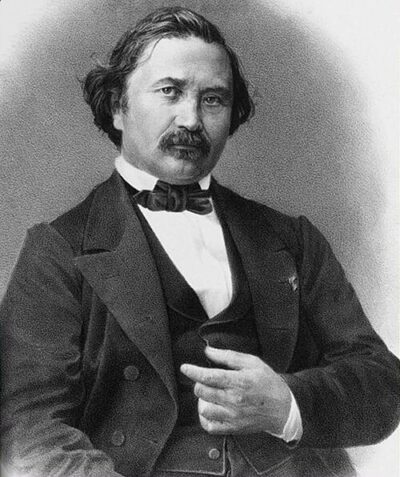
This hypothesis was first conjectured in 1845 by Joseph Bertrand, who verified it for all integers up to 3,000,000.
Chebyshev proved it in 1852 and so it is also called the Bertrand–Chebyshev theorem or Chebyshev's theorem. Chebyshev's theorem can also be stated as a relationship with π(x), the prime-counting function (number of primes less than or equal to x):π(x)−π(x2)≥1, for all x≥2.
From the Wikipedia article “Bertrand's postulate” (en.wikipedia.org/wiki/Bertrand's_postulate), by its contributors, under CC BY-SA 4.0 (creativecommons.org/licenses/by-sa/4.0/). Copied 2026-11-17; not changed.
Confirmed Two sources agree. Cited One source, and it names where it got it. One source One source, without a reference of its own. Sources disagree The sources disagree. We show the best-supported value and keep theirs below.