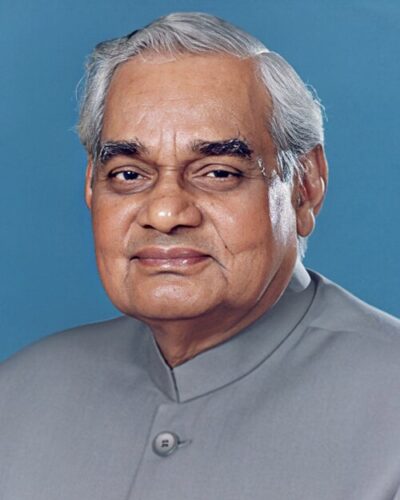
Bharatiya Jana Sangh
Bharatiya Jana Sangh is a former political party in India. It was founded in 1951. It stands for conservatism and Hindutva.
- Country
- India
- Founded
- 1951
- Ideology
- conservatism
All 6 facts, and where they come from
Facts
6 facts · 0 confirmed by two sources · 1 cited · 5 from one source
Where this comes from
Papalocal keeps its own record. It started from these sources; what each one said is kept here as it was copied, so a change on their side never changes this page by itself. Tap one to read its version.
What Wikidata says · copied November 16, 2026 · revision 2484505230
- Described as
- former political party in India
- What it is
- political party
- Founded
- 1951 · 1 reference
- Ended
- 1974 · 1 reference
- Country
- India
- Ideology
- conservatism · 1 reference; Hindutva
- Wikipedias with a page
- 23
Wikidata item Q3245961 (wikidata.org/wiki/Q3245961), public domain (CC0). Copied 2026-11-16.
What Wikipedia says · copied November 16, 2026 · revision 1382737151
The Bharatiya Jana Sangh (abbreviated as BJS or JS, short name: Jan Sangh; lit. 'All-India People's Union') was a Hindutva political party active in India, sitting on the right-wing to far-right of the political spectrum. It was established on 21 October 1951 in Delhi by Shyama Prasad Mukherjee. Jan Sangh was the political arm of Rashtriya Swayamsevak Sangh (RSS), a right-wing Hindutva paramilitary organisation. In 1977, it merged with several other left, centre, and right parties opposed to the Indian National Congress and formed the Janata Party. In 1980, the members of the erstwhile Jan Sangh quit Janata Party after its defeat in the 1980 general election and formed the Bharatiya Janata Party, which is the direct political successor to the Jan Sangh.
From the Wikipedia article “Bharatiya Jana Sangh” (en.wikipedia.org/wiki/Bharatiya_Jana_Sangh), by its contributors, under CC BY-SA 4.0 (creativecommons.org/licenses/by-sa/4.0/). Copied 2026-11-16; not changed.
Confirmed Two sources agree. Cited One source, and it names where it got it. One source One source, without a reference of its own. Sources disagree The sources disagree. We show the best-supported value and keep theirs below.