

Bharatiya Janata Party
The Bharatiya Janata Party is a right-wing political party in India. It was founded in 1980 by Atal Bihari Vajpayee and L. K. Advani. Its headquarters are in New Delhi. It stands for cultural nationalism, Hindu nationalism and Hindutva.
- Country
- India
- Founded
- 1980
- Ideology
- cultural nationalism
- Chair
- Jagat Prakash Nadda (2020–)
All 13 facts, and where they come from
Facts
13 facts · 0 confirmed by two sources · 8 cited · 5 from one source
Where this comes from
Papalocal keeps its own record. It started from these sources; what each one said is kept here as it was copied, so a change on their side never changes this page by itself. Tap one to read its version.
What Wikidata says · copied November 16, 2026 · revision 2563821839
- Described as
- right-wing political party in India
- Other names
- BJP, Indian People's Party
- What it is
- political party · 1 reference
- Founded
- 1980
- Founded by
- Atal Bihari Vajpayee · 1 reference; L. K. Advani · 2 references
- Headquarters
- New Delhi · 1 reference
- Country
- India
- Chair
- Jagat Prakash Nadda (2020–) · 1 reference; Amit Shah (2014–2020)
- Ideology
- cultural nationalism; Hindu nationalism · 1 reference; Hindutva · 1 reference; Integral humanism · 1 reference
- Official website
- https://www.bjp.org/ · 1 reference
- Wikipedias with a page
- 86
Wikidata item Q10230 (wikidata.org/wiki/Q10230), public domain (CC0). Copied 2026-11-16.
What Wikipedia says · copied November 16, 2026 · revision 1385575030
The Bharatiya Janata Party (BJP; lit. 'Indian People's Party') is a Hindu nationalist political party in India, sitting on the right-wing to far-right of the political spectrum; it is one of the two major Indian political parties alongside the Indian National Congress. Since 2014, it has been the ruling political party in India under Prime Minister Narendra Modi. The BJP follows Hindutva, a Hindu nationalist ideology; the party has organisational and ideological links to the Rashtriya Swayamsevak Sangh (RSS), a Hindutva paramilitary volunteer organisation. It is the country's biggest political party in terms of representation in the parliament as well as state legislatures while also being the largest in the world by claimed membership numbers, with having more than 140 million members as of 2025.
The party's origins lie in the Bharatiya Jana Sangh, which was founded in 1951 by Indian politician Shyama Prasad Mukherjee, after he left the Hindu Mahasabha to form a party as the political wing of the RSS. After the Emergency of 1975–1977, the Jana Sangh merged with several other political parties to form the Janata Party; it defeated the then-incumbent Indian National Congress in the 1977 general election. After three years in power, the Janata Party dissolved in 1980, with the members of the erstwhile Jana Sangh reconvening to form the modern-day BJP. Although initially unsuccessful—winning only two seats in the 1984 general election, it grew in strength on the back of the Ram Rath Yatra in Uttar Pradesh. Following victories in several state elections and better performances in national elections, the BJP became the largest political party in the Parliament in 1996; however, it lacked a majority in the lower house of Parliament, and its government, under its then-leader Atal Bihari Vajpayee, lasted for only 13 days.
After the 1998 general election, the BJP-led coalition known as the National Democratic Alliance (NDA) under prime minister Vajpayee formed a government that lasted for a year. Following fresh elections, the NDA government—again headed by Vajpayee—lasted for a full term in office; this was the first non-Congress government to do so. In the 2004 general election, the NDA suffered an unexpected defeat, and for the next ten years, the BJP was the principal opposition party. Narendra Modi, then the chief minister of Gujarat, led the party to a landslide victory in the 2014 general election. Modi has since led the NDA government as India's prime minister, including being re-elected with a sole majority in the 2019 general election and with a coalition in the 2024 general election. As of May 2026, the NDA alliance governs 20 Indian states and 2 union territories.
The official ideology of the BJP is integral humanism, first formulated by Deendayal Upadhyaya in 1965. The party advocates social conservatism and a foreign policy centred on nationalist principles. During its first period in national government, the BJP avoided its Hindutva priorities, and focused on a largely neoliberal economic policy that prioritised globalisation and economic growth over social welfare. Since returning to government in 2014, the now-ruling BJP has enacted several priorities of the RSS, including criminalising the practice of triple talaq, and revoking Article 370 of the Indian constitution (which granted autonomy to Jammu and Kashmir), abrogating its statehood. India has experienced nationwide democratic backsliding under the BJP's rule since 2014. As of 2025, the BJP has more than 140 million members, making it the largest political party by membership in the world.
From the Wikipedia article “Bharatiya Janata Party” (en.wikipedia.org/wiki/Bharatiya_Janata_Party), by its contributors, under CC BY-SA 4.0 (creativecommons.org/licenses/by-sa/4.0/). Copied 2026-11-16; not changed.
Confirmed Two sources agree. Cited One source, and it names where it got it. One source One source, without a reference of its own. Sources disagree The sources disagree. We show the best-supported value and keep theirs below.
Picture: Wikimedia Commons: Supporter of Bharatiya Janata Party at an election rally in Amethi.jpg · See Commons file page
People connected 13
Party members
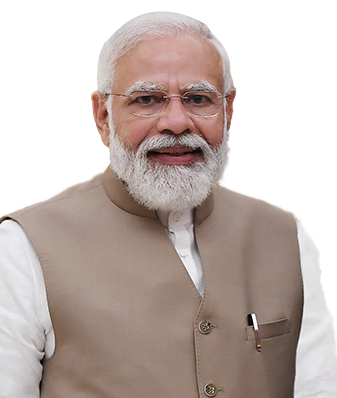 Narendra ModiPrime Minister of India since 2014
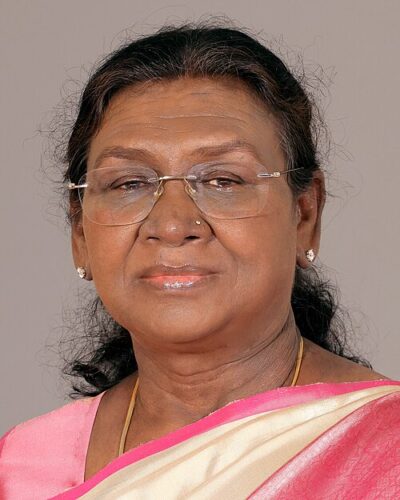 Droupadi MurmuPresident of India since 2026
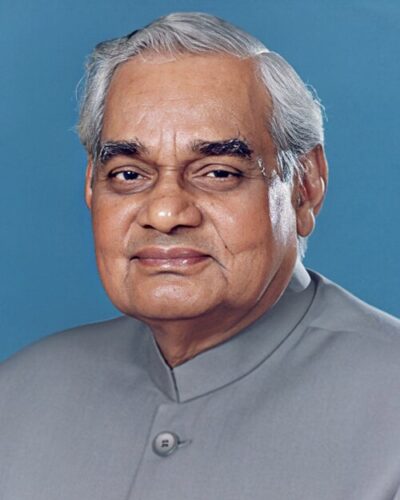 Atal Bihari Vajpayee (1980–2018)Prime Minister of India in 1996 and from 1998 to 2004
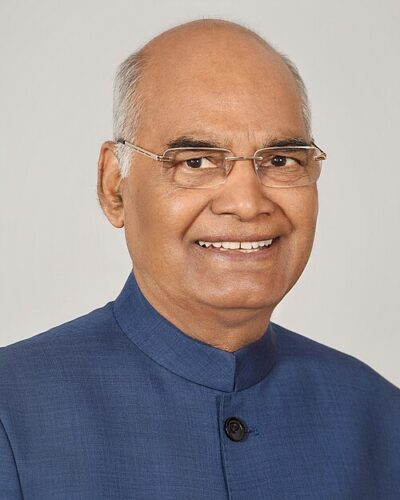 Ram Nath Kovind (1991–)President of India from 2017 to 2022
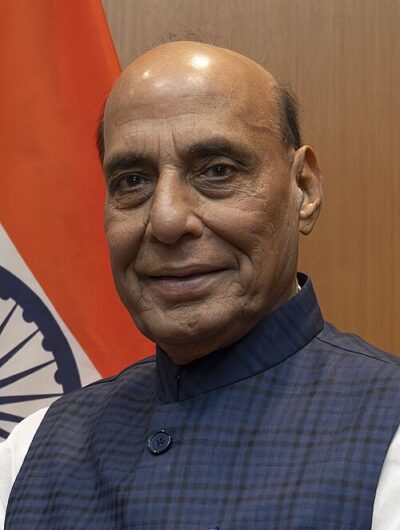 Rajnath Singh (1980–)Indian politician
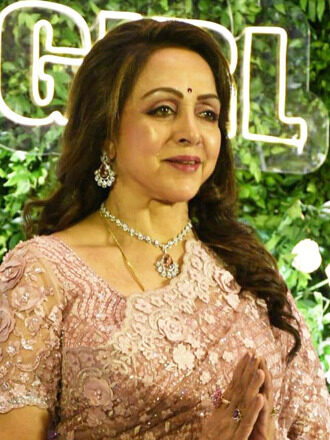 Hema MaliniIndian actress, dancer, and politician
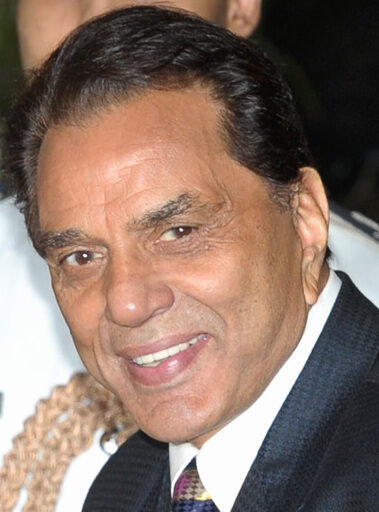 DharmendraIndian actor and politician (1935–2025)
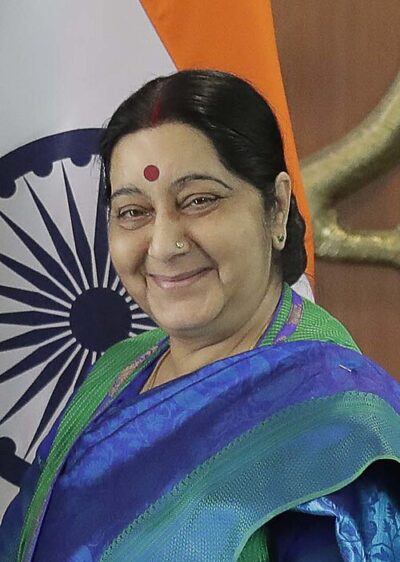 Sushma SwarajIndian politician
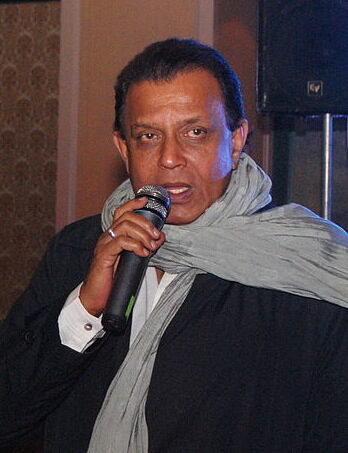 Mithun ChakrabortyIndian film actor
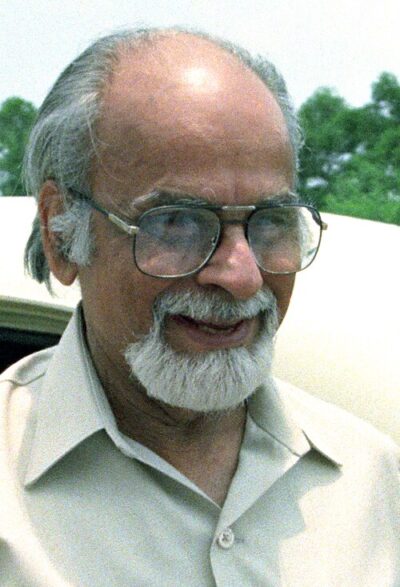 Inder Kumar Gujral (1998–)Prime Minister of India (1997-1998)
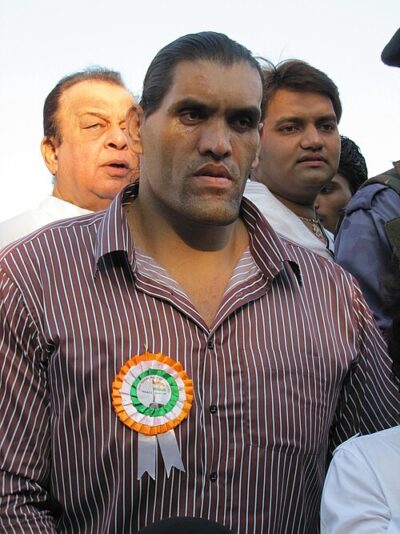 The Great Khali (2022–)Indian-American professional wrestler, that can’t hold a flaming pan for the life of his big chin
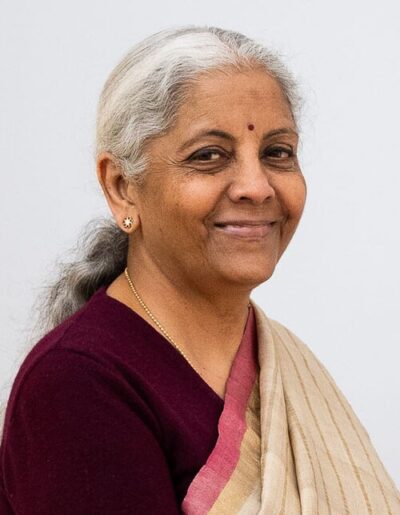 Nirmala SitharamanIndian politician
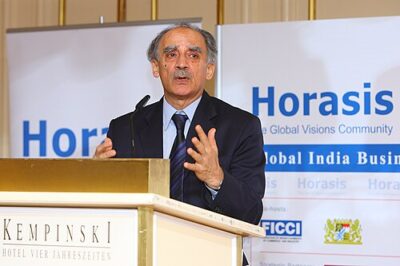 Arun ShourieIndian journalist and politician
