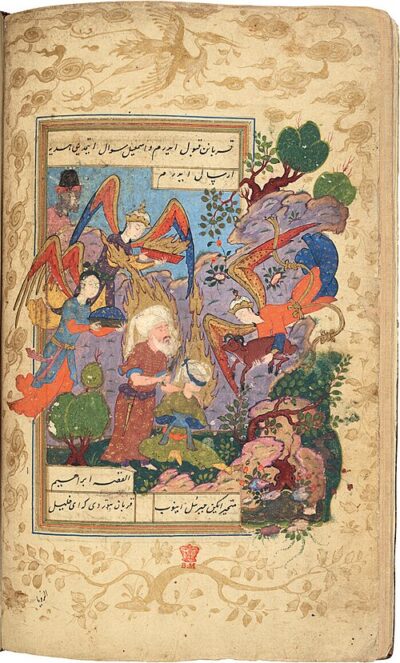
Binding of Ishmael
Binding of Ishmael is a story from the Qur'an in Islam.
All 3 facts, and where they come from
Facts
3 facts · 0 confirmed by two sources · 0 cited · 3 from one source
Where this comes from
Papalocal keeps its own record. It started from these sources; what each one said is kept here as it was copied, so a change on their side never changes this page by itself. Tap one to read its version.
What Wikidata says · copied November 17, 2026 · revision 2469942629
- Described as
- story from the Qur'an in Islam
- Other names
- Binding of Ismail
- What it is
- human sacrifice; Qur’an story; Qisas Al-Anbiya
- Wikipedias with a page
- 2
Wikidata item Q126589175 (wikidata.org/wiki/Q126589175), public domain (CC0). Copied 2026-11-17.
What Wikipedia says · copied November 17, 2026 · revision 1347337210
The Binding of Ishmael (Arabic: عَقْد إِسْمَاعِيل, romanized: ʿAqd Ismāʿīl) refers to the narrative in Islamic tradition where Abraham is commanded by God to sacrifice his son, generally believed by Muslims to be Ishmael, though the Qur'an does not explicitly name the son. This contrasts with the Tawrat (the Arabic term for the Torah in Islamic context), which identifies Isaac as the son to be sacrificed in the Binding of Isaac. The story, known as the dhabih in Islamic tradition, is believed to have originated as an oral narrative, marked by variability and creative flexibility across versions, as noted by scholar Norman Calder. The narrative holds significant theological and cultural importance in Islam, particularly in relation to Eid al-Adha and the themes of obedience and sacrifice.
From the Wikipedia article “Binding of Ishmael” (en.wikipedia.org/wiki/Binding_of_Ishmael), by its contributors, under CC BY-SA 4.0 (creativecommons.org/licenses/by-sa/4.0/). Copied 2026-11-17; not changed.
Confirmed Two sources agree. Cited One source, and it names where it got it. One source One source, without a reference of its own. Sources disagree The sources disagree. We show the best-supported value and keep theirs below.
Picture: Wikimedia Commons: 037102 As-Saffat UrduScript.jpg · See Commons file page