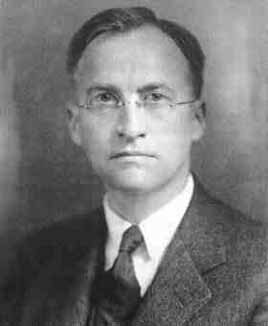
Birkhoff's theorem
Birkhoff's theorem is a theorem that any spherically symmetric solution of the vacuum field equations must be static and asymptotically flat.
All 2 facts, and where they come from
Facts
2 facts · 0 confirmed by two sources · 0 cited · 2 from one source
Where this comes from
Papalocal keeps its own record. It started from these sources; what each one said is kept here as it was copied, so a change on their side never changes this page by itself. Tap one to read its version.
What Wikidata says · copied November 17, 2026 · revision 2480398086
- Described as
- theorem that any spherically symmetric solution of the vacuum field equations must be static and asymptotically flat
- Other names
- Birkhoff–Jebsen's theorem, Birkhoff–Jebsen theorem, Jebsen–Birkhoff theorem
- What it is
- theorem
- Named after
- George David Birkhoff
- Wikipedias with a page
- 15
Wikidata item Q865665 (wikidata.org/wiki/Q865665), public domain (CC0). Copied 2026-11-17.
What Wikipedia says · copied November 17, 2026 · revision 1379354136
In general relativity, Birkhoff–Jebsen's theorem states that any spherically symmetric solution of the vacuum field equations must be static and asymptotically flat. This means that the exterior solution (i.e. the spacetime outside of a spherical, nonrotating, gravitating body) must be given by the Schwarzschild metric. The converse of the theorem is true and is called Israel's theorem. The converse is not true in Newtonian gravity.
The theorem was first proven by Jørg Tofte Jebsen in 1921 and rediscovered in 1923 by George David Birkhoff (author of another famous Birkhoff theorem, the pointwise ergodic theorem which lies at the foundation of ergodic theory). Israel's theorem was proved by Werner Israel.
From the Wikipedia article “Birkhoff's theorem (relativity)” (en.wikipedia.org/wiki/Birkhoff's_theorem_(relativity)), by its contributors, under CC BY-SA 4.0 (creativecommons.org/licenses/by-sa/4.0/). Copied 2026-11-17; not changed.
Confirmed Two sources agree. Cited One source, and it names where it got it. One source One source, without a reference of its own. Sources disagree The sources disagree. We show the best-supported value and keep theirs below.