Borda–Carnot equation
Borda–Carnot equation is an equation in fluid dynamics.
All 3 facts, and where they come from
Facts
3 facts · 0 confirmed by two sources · 0 cited · 3 from one source
Where this comes from
Papalocal keeps its own record. It started from these sources; what each one said is kept here as it was copied, so a change on their side never changes this page by itself. Tap one to read its version.
What Wikidata says · copied November 17, 2026 · revision 2553145323
- Described as
- equation in fluid dynamics
- What it is
- scientific theory
- Named after
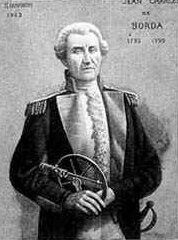
- Jean-Charles de Borda; Lazare Carnot
- Wikipedias with a page
- 7
Wikidata item Q4491920 (wikidata.org/wiki/Q4491920), public domain (CC0). Copied 2026-11-17.
What Wikipedia says · copied November 17, 2026 · revision 1371129544
In fluid dynamics the Borda–Carnot equation (English: kar-NOH, French: [kaʁno]) is an empirical description of the mechanical energy losses of the fluid due to a (sudden) flow expansion. It describes how the total head reduces due to the losses. This is in contrast with Bernoulli's principle for dissipationless flow (without irreversible losses), where the total head is a constant along a streamline. The equation is named after Jean-Charles de Borda, who published in 1766, and after Lazare Carnot.
This equation is used both for open channel flow as well as in pipe flows. In parts of the flow where the irreversible energy losses are negligible, Bernoulli's principle can be used.
From the Wikipedia article “Borda–Carnot equation” (en.wikipedia.org/wiki/Borda–Carnot_equation), by its contributors, under CC BY-SA 4.0 (creativecommons.org/licenses/by-sa/4.0/). Copied 2026-11-17; not changed.
Confirmed Two sources agree. Cited One source, and it names where it got it. One source One source, without a reference of its own. Sources disagree The sources disagree. We show the best-supported value and keep theirs below.