Borel–Cantelli lemma
Borel–Cantelli lemma is a mathematical sentence.
All 4 facts, and where they come from
Facts
4 facts · 0 confirmed by two sources · 0 cited · 4 from one source
Where this comes from
Papalocal keeps its own record. It started from these sources; what each one said is kept here as it was copied, so a change on their side never changes this page by itself. Tap one to read its version.
What Wikidata says · copied November 17, 2026 · revision 2550493971
- Described as
- mathematical sentence
- What it is
- lemma; theorem
- Named after
- Francesco Paolo Cantelli; Émile Borel
- Wikipedias with a page
- 20
Wikidata item Q893496 (wikidata.org/wiki/Q893496), public domain (CC0). Copied 2026-11-17.
What Wikipedia says · copied November 17, 2026 · revision 1379426780
The Borel–Cantelli lemma is a result in measure theory. It is often stated in the context of probability theory, where it is used to study whether, in a given sequence of events, a finite or infinite number of these events occur. The statement of the lemma is often split into two parts:
The first Borel–Cantelli lemma, which states that if the sum of the probabilities of the events is finite, then the probability that infinitely many of them occur is 0. This result holds for any sequence of events, without additional assumptions;
The second Borel–Cantelli lemma, which states that if the events are independent and the sum of their probabilities is infinite, then the probability that infinitely many of them occur is 1.
It follows that the probability of the limit superior of a sequence of independent events is always either zero or one. For this reason, the Borel–Cantelli lemma is often referred to as a zero-one law. Other examples or similar results include Kolmogorov's zero–one law and the Hewitt–Savage zero–one law.
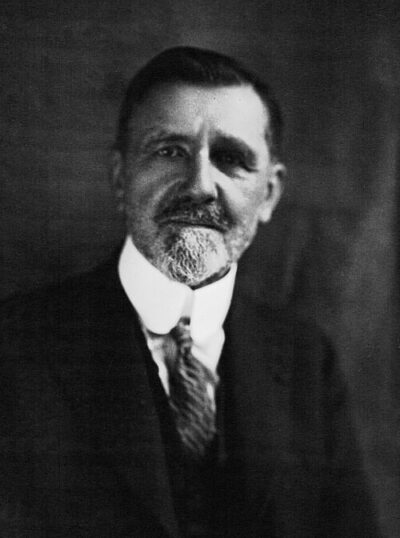
The Borel–Cantelli lemma is named after Émile Borel and Francesco Paolo Cantelli, who stated it in the first decades of the 20th century.
From the Wikipedia article “Borel–Cantelli lemma” (en.wikipedia.org/wiki/Borel–Cantelli_lemma), by its contributors, under CC BY-SA 4.0 (creativecommons.org/licenses/by-sa/4.0/). Copied 2026-11-17; not changed.
Confirmed Two sources agree. Cited One source, and it names where it got it. One source One source, without a reference of its own. Sources disagree The sources disagree. We show the best-supported value and keep theirs below.