Borel subgroup
Borel subgroup is a maximal Zariski-closed connected solvable algebraic subgroup of an algebraic group.
All 1 facts, and where they come from
Facts
1 facts · 0 confirmed by two sources · 0 cited · 1 from one source
Where this comes from
Papalocal keeps its own record. It started from these sources; what each one said is kept here as it was copied, so a change on their side never changes this page by itself. Tap one to read its version.
What Wikidata says · copied November 17, 2026 · revision 2541299491
- Described as
- maximal Zariski-closed connected solvable algebraic subgroup of an algebraic group
- Named after
- Armand Borel
- Wikipedias with a page
- 5
Wikidata item Q4944913 (wikidata.org/wiki/Q4944913), public domain (CC0). Copied 2026-11-17.
What Wikipedia says · copied November 17, 2026 · revision 1290441457
In the theory of algebraic groups, a Borel subgroup of an algebraic group G is a maximal Zariski closed and connected solvable algebraic subgroup. For example, in the general linear group GLn (n x n invertible matrices), the subgroup of invertible upper triangular matrices is a Borel subgroup.
For groups realized over algebraically closed fields, there is a single conjugacy class of Borel subgroups.
Borel subgroups are one of the two key ingredients in understanding the structure of simple (more generally, reductive) algebraic groups, in Jacques Tits' theory of groups with a (B, N) pair. Here the group B is a Borel subgroup and N is the normalizer of a maximal torus contained in B.
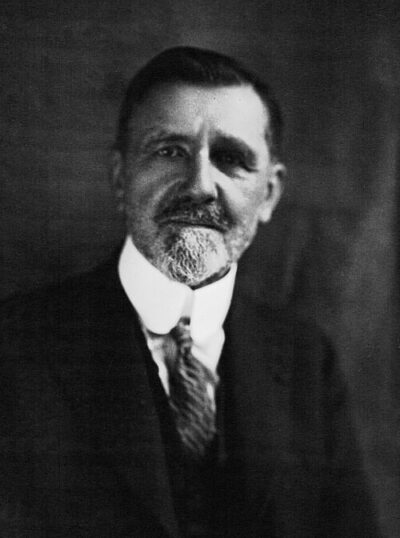
The notion was introduced by Armand Borel, who played a leading role in the development of the theory of algebraic groups.
From the Wikipedia article “Borel subgroup” (en.wikipedia.org/wiki/Borel_subgroup), by its contributors, under CC BY-SA 4.0 (creativecommons.org/licenses/by-sa/4.0/). Copied 2026-11-17; not changed.
Confirmed Two sources agree. Cited One source, and it names where it got it. One source One source, without a reference of its own. Sources disagree The sources disagree. We show the best-supported value and keep theirs below.