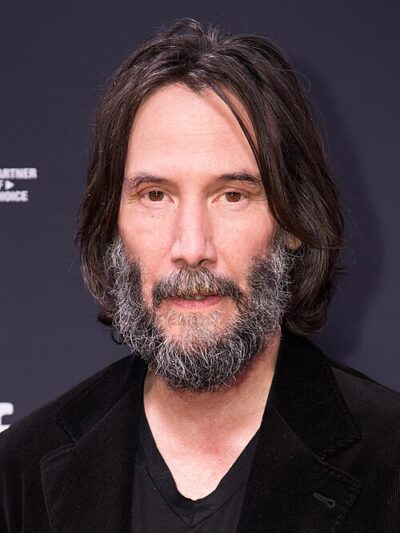
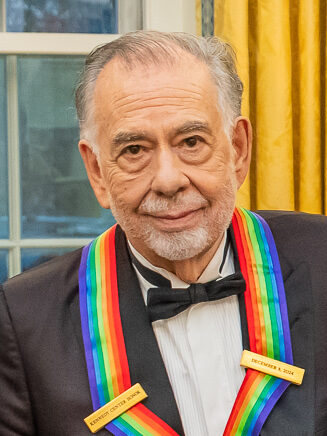
Bram Stoker's Dracula
Bram Stoker's Dracula is a 1992 film directed by Francis Ford Coppola. It stars Gary Oldman, Winona Ryder and Anthony Hopkins. It won the Academy Award for Best Costume Design and 4 more.
- Released
- November 13, 1992
- Directed by
- Francis Ford Coppola
- Genre
- horror film
- Country of origin
- United Kingdom
All 31 facts, and where they come from
Facts
31 facts · 0 confirmed by two sources · 20 cited · 11 from one source
Where this comes from
Papalocal keeps its own record. It started from these sources; what each one said is kept here as it was copied, so a change on their side never changes this page by itself. Tap one to read its version.
What Wikidata says · copied November 16, 2026 · revision 2569146280
- Described as
- 1992 film directed by Francis Ford Coppola
- Other names
- Dracula
- What it is
- film
- Directed by
- Francis Ford Coppola · 7 references
- Music by
- Wojciech Kilar
- Screenplay by
- James V. Hart
- Produced by
- Francis Ford Coppola; Fred Fuchs
- Starring
- Gary Oldman · 8 references; Winona Ryder · 7 references; Anthony Hopkins · 6 references; Keanu Reeves · 6 references; Richard E. Grant · 2 references; Cary Elwes · 4 references; Billy Campbell · 1 reference; Sadie Frost · 4 references; Tom Waits · 4 references; Monica Bellucci · 4 references
- Genre
- horror film · 4 references; vampire film; period drama film · 1 reference; historical drama film · 2 references
- Released
- November 13, 1992 · 5 references; February 5, 1993 · 1 reference; February 11, 1993 · 1 reference
- Original language
- English; Romanian · 1 reference
- Country of origin
- United Kingdom; United States
- Based on
- Dracula · 1 reference
- Awards
- Academy Award for Best Costume Design (1993) · 1 reference; Academy Award for Best Makeup and Hairstyling (1993) · 1 reference; Academy Award for Best Sound Editing (1993) · 1 reference; Saturn Award for Best Costume (1992); Saturn Award for Best Director (1993)
- Wikipedias with a page
- 56
Wikidata item Q107325 (wikidata.org/wiki/Q107325), public domain (CC0). Copied 2026-11-16.
What Wikipedia says · copied November 16, 2026 · revision 1383814651
Bram Stoker's Dracula is a 1992 American Gothic horror film co-produced and directed by Francis Ford Coppola and written by James V. Hart, based on the eponymous 1897 novel Dracula by Bram Stoker. The film stars Gary Oldman, Winona Ryder, Anthony Hopkins, and Keanu Reeves. Set in 19th-century England and Romania, it follows Count Dracula (Oldman), a vampire formerly known as the Wallachian ruler Vlad the Impaler, who falls in love with Mina Murray (Ryder), the fiancée of his solicitor Jonathan Harker (Reeves). When Dracula wreaks havoc in London, Professor Abraham Van Helsing (Hopkins), an expert in vampirism, is summoned to bring an end to his reign of terror.
Principal photography began at Sony Pictures Studios and Universal Studios Lot on October 14, 1991, and concluded on January 31, 1992, in addition to reshoots at Saint Sophia Greek Orthodox Cathedral in Los Angeles. The closing credits theme "Love Song for a Vampire" was written and performed by Annie Lennox.
Bram Stoker's Dracula was theatrically released by Columbia Pictures in the United States on November 13, 1992, to mixed reviews from critics, with praise for Coppola's direction, the production values, and Oldman's performance, but criticism for the story and Reeves' performance. The film opened at the top of the box office, grossing $215.9 million against its $40 million production budget. At the 65th Academy Awards, the film received four nominations and won three, Best Costume Design for Eiko Ishioka, Best Sound Editing, and Best Makeup.
From the Wikipedia article “Bram Stoker's Dracula (1992 film)” (en.wikipedia.org/wiki/Bram_Stoker's_Dracula_(1992_film)), by its contributors, under CC BY-SA 4.0 (creativecommons.org/licenses/by-sa/4.0/). Copied 2026-11-16; not changed.
Confirmed Two sources agree. Cited One source, and it names where it got it. One source One source, without a reference of its own. Sources disagree The sources disagree. We show the best-supported value and keep theirs below.