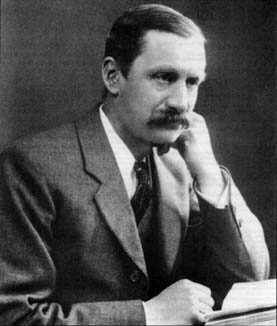
Burnside's lemma
Burnside's lemma is a lemma stating that, given a finite group G acting on a set, the number of orbits times |G| equals the sum (over every element of G) of the numbers of fixed points.
All 3 facts, and where they come from
Facts
3 facts · 0 confirmed by two sources · 0 cited · 3 from one source
Where this comes from
Papalocal keeps its own record. It started from these sources; what each one said is kept here as it was copied, so a change on their side never changes this page by itself. Tap one to read its version.
What Wikidata says · copied November 18, 2026 · revision 2559381003
- Described as
- lemma stating that, given a finite group G acting on a set, the number of orbits times |G| equals the sum (over every element of G) of the numbers of fixed points
- Other names
- Burnside's counting theorem, Cauchy–Frobenius lemma, Cauchy-Frobenius lemma, orbit-counting theorem
- What it is
- theorem
- Named after
- William Burnside; Augustin-Louis Cauchy
- Wikipedias with a page
- 19
Wikidata item Q1330377 (wikidata.org/wiki/Q1330377), public domain (CC0). Copied 2026-11-18.
What Wikipedia says · copied November 18, 2026 · revision 1376691569
Burnside's lemma, sometimes also called Burnside's counting theorem, the Cauchy–Frobenius lemma, or the orbit-counting theorem, is a result in group theory that is often useful in taking account of symmetry when counting mathematical objects. It was discovered by Augustin Louis Cauchy and Ferdinand Georg Frobenius, and became well known after William Burnside quoted it. The result enumerates orbits of a symmetry group acting on some objects: that is, it counts distinct objects, considering objects symmetric to each other as the same; or counting distinct objects up to a symmetry equivalence relation; or counting only objects in canonical form. For example, in describing possible organic compounds of certain type, one considers them up to spatial rotation symmetry: different rotated drawings of a given molecule are chemically identical (whereas a mirror reflection might give a different compound).
From the Wikipedia article “Burnside's lemma” (en.wikipedia.org/wiki/Burnside's_lemma), by its contributors, under CC BY-SA 4.0 (creativecommons.org/licenses/by-sa/4.0/). Copied 2026-11-18; not changed.
Confirmed Two sources agree. Cited One source, and it names where it got it. One source One source, without a reference of its own. Sources disagree The sources disagree. We show the best-supported value and keep theirs below.